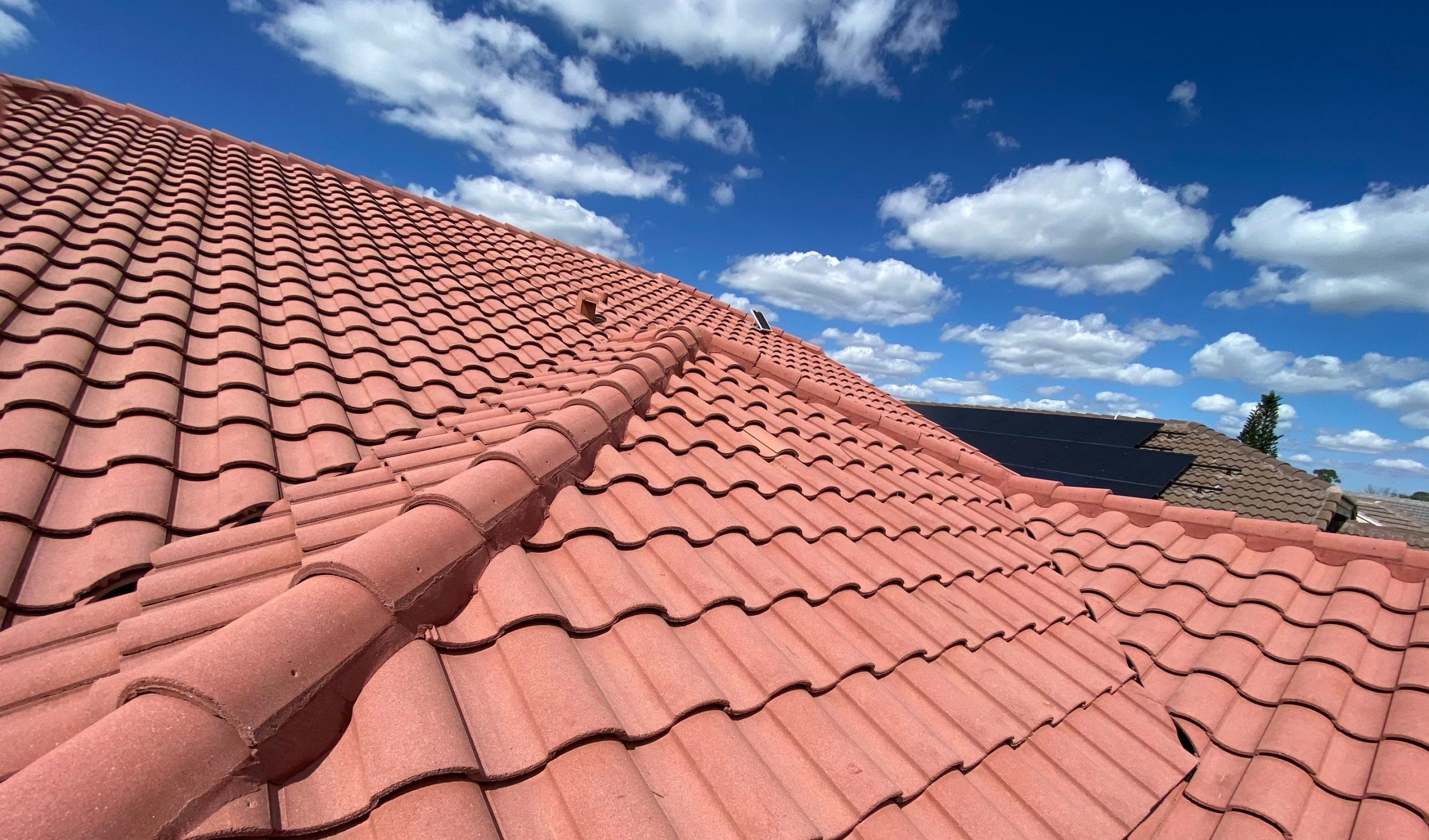
Fort Myers sits at the edge of one of the most hurricane-active stretches of coastline in the United States, and no part of a home takes more punishment from that geography than the roof. The Florida Department of Financial Services reports that roof claims consistently rank among the highest-cost homeowner insurance losses in the state, and the pattern is especially pronounced in Southwest Florida after active storm seasons. For Fort Myers homeowners, staying ahead of that exposure starts with one thing: knowing what your roof’s actual condition is before the next storm arrives.
The truth is that Southwest Florida’s climate does not give roofs a break. From June through November, hurricane-force winds test every fastener and seam. Year-round, intense UV radiation and salt air from the Gulf quietly break down shingles, flashing, and sealants until a routine spring rain becomes a ceiling stain and a major repair bill.
This checklist is built specifically for Fort Myers and Southwest Florida conditions. It covers what to inspect, what warning signs look like in this climate, how the professional process works, what it costs locally, and the Florida-specific rules that affect every roofing job in Lee County. Whether you own a single-family home in Cape Coral, a townhouse near downtown Fort Myers, or a commercial property in Bonita Springs, this guide gives you a clear picture of where your roof stands before storm season begins.
What a Roof Inspection Actually Covers
A roof inspection is a methodical assessment of every component that keeps water out of your home: the surface material (shingles, metal panels, or tile), the underlayment beneath it, the flashing around penetrations and edges, the gutters and downspouts, the soffits and fascia, and the attic space below. A cursory glance from the driveway is not an inspection. A real inspection gets eyes on all of it.
In Fort Myers, that assessment also includes factors that inspectors in northern states rarely think about: UV-accelerated granule loss on asphalt shingles, rust and corrosion on metal fasteners and flashing caused by Gulf salt air, algae and lichen growth fed by humidity, and impact damage from flying debris during tropical storms. Understanding protective coating options is worth a look before your inspection, and the Wikipedia overview of roof coatings provides a solid background on elastomeric, silicone, and reflective coatings that extend roof life in Florida’s heat.
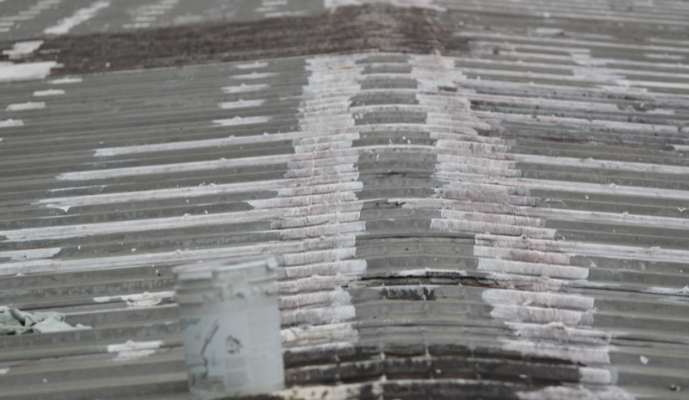
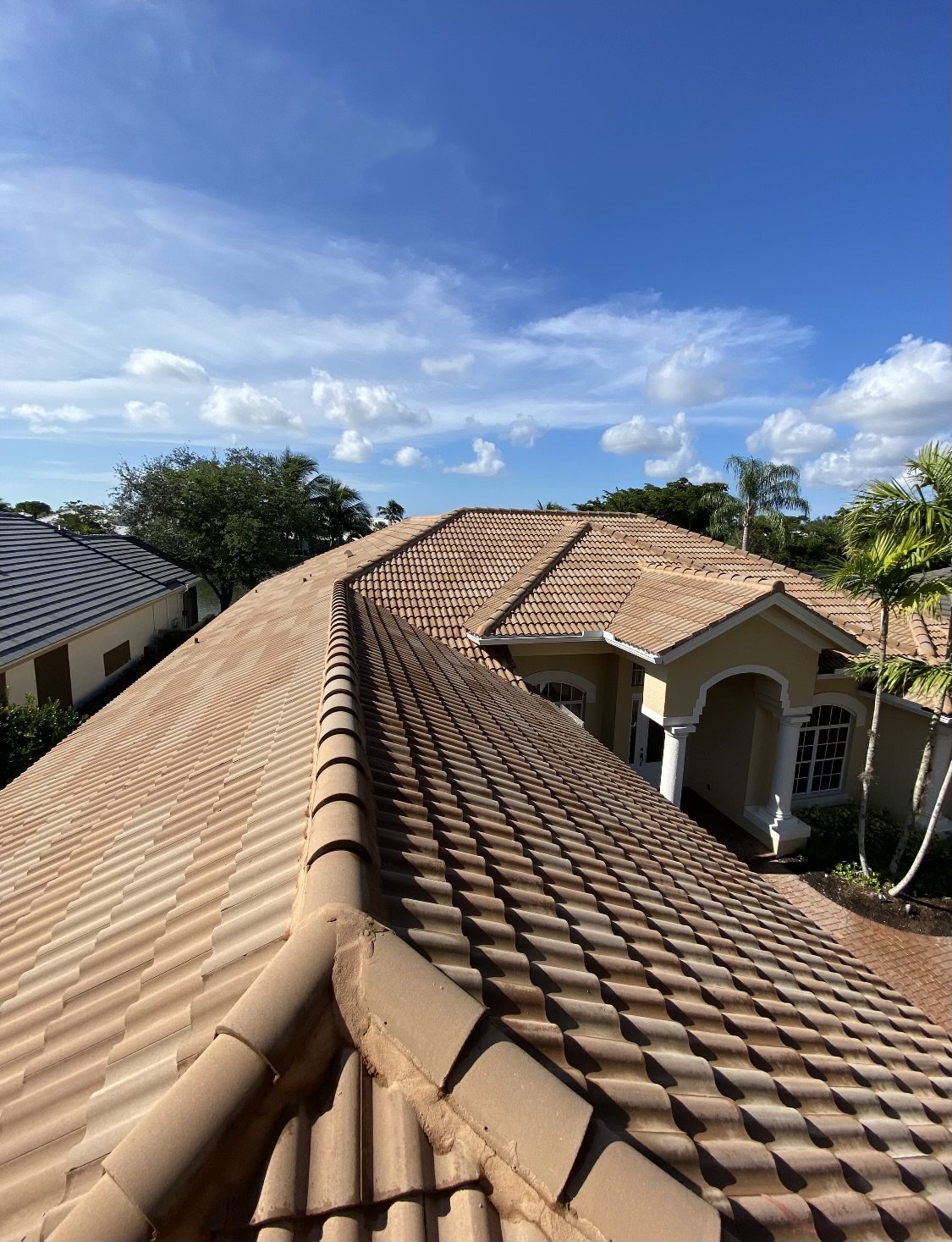
Fort Myers homeowners choose between two primary roof systems. Asphalt shingles remain the most common option in Lee County because of lower upfront cost, but they typically last 15 to 20 years under Florida’s UV load rather than the 25 to 30 years advertised for cooler climates. Properties featuring metal roofing Florida Fort Myers installations generally hold up far better to wind uplift, UV, and salt corrosion, with lifespans that can reach 50 years or more.
When Fort Myers Homeowners Should Call for an Inspection
Picture this: a homeowner in the Iona neighborhood of Fort Myers notices a small water ring on the bedroom ceiling in April. She figures it must have come from the last hard rain and puts a bowl under it. By August, when a roofer finally gets up there, the inspector finds the leak has been active for months. A small section of cracked flashing around a plumbing vent had been letting in water with every rain, and the underlying decking had begun to rot. What could have been a $400 flashing repair had become a $3,200 decking replacement plus interior drywall work.
That scenario plays out constantly in Southwest Florida, and it is almost always preventable. Schedule a professional roof inspection if any of the following apply:
- Your roof is five or more years old and has not been inspected in the past 12 months.
- A named tropical storm or hurricane has passed within 50 miles of Fort Myers.
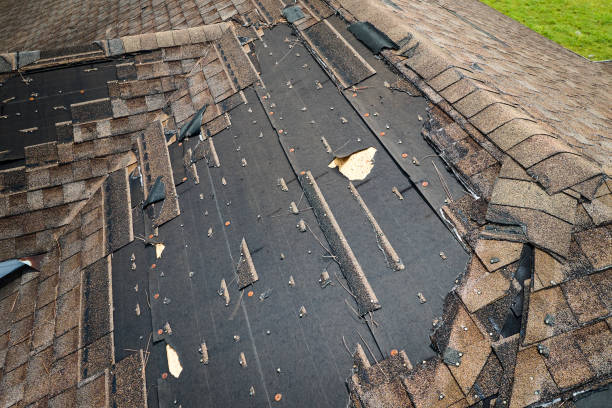
- You can see missing, curled, cracked, or discolored shingles from the ground.
- Granules from asphalt shingles are accumulating in your gutters.
- You are buying or selling a property anywhere in Lee County.
- Your energy bills have crept up without an obvious reason (poor roof ventilation is often the culprit).
For same-day roof leak repair Fort Myers assessments and repairs, Floridacleanroof responds quickly to Southwest Florida homeowners who cannot afford to wait through a long booking queue during storm season.
How a Professional Roof Inspection Works in Fort Myers — Step by Step
Knowing what happens during a professional inspection helps you prepare, ask the right questions, and spot whether a contractor is being thorough or cutting corners. The FEMA roof inspection guide for storm-prone regions outlines best practices that reputable Fort Myers contractors follow on every job.
- Ground-level perimeter walk. The inspector circles the entire property looking for obvious red flags: sagging ridgelines, missing sections of shingles or flashing, gutters pulling away from the fascia, downspouts disconnected from the drainage system, and any tree limbs in contact with the roof surface. In Fort Myers, this step also scans for storm debris impact points that are easy to miss from above.
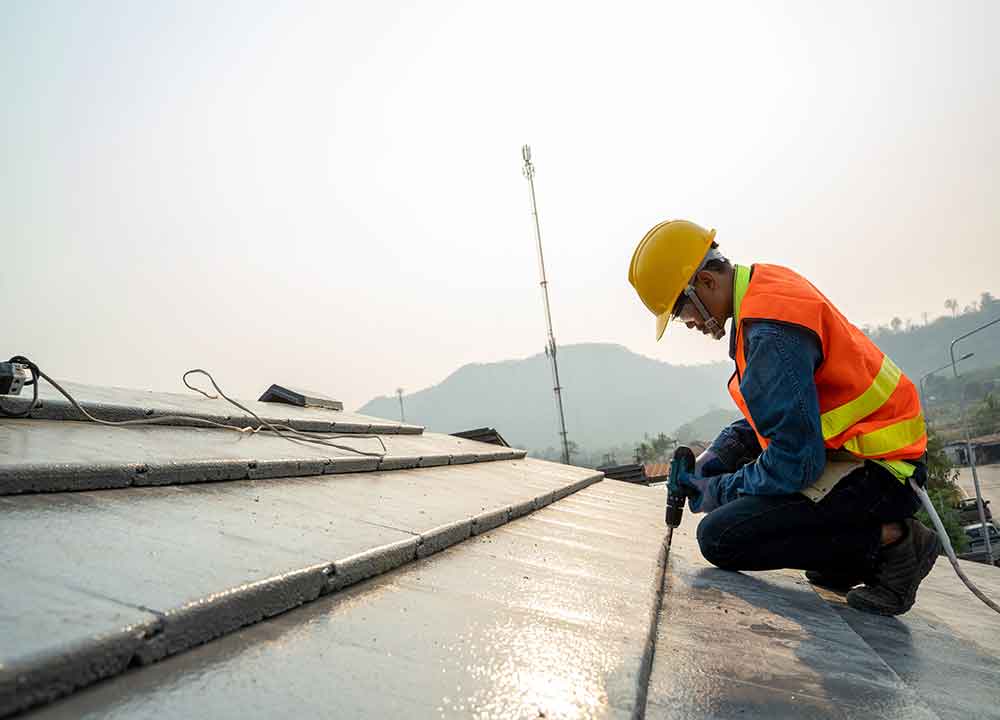
- Roof surface inspection. Up on the roof, the inspector checks every field shingle, metal panel, or tile for cracks, blistering, lifted edges, granule loss, and UV bleaching. Florida’s UV index runs at maximum for most of the year, and asphalt shingles in Fort Myers degrade from the top down in ways that are only visible at close range.
- Flashing and sealant evaluation. All transition zones get scrutinized: the base and step flashing along walls, counter flashing at chimneys, boot seals around plumbing vents, and valley flashing where two roof planes meet. Salt air from the Gulf corrodes metal flashing faster in coastal Fort Myers neighborhoods like McGregor or Punta Rassa than it does even 20 miles inland.
- Gutters, downspouts, and drainage. Southwest Florida’s rainy season drops up to seven inches in a single month. Gutters must slope correctly, connect securely to fascia, and discharge well away from the foundation. The inspector checks for sagging, joint separations, blockages, and pooling areas on flat or low-slope sections.
- Attic and interior check. This step separates a thorough inspection from a quick roof walk. The attic reveals moisture staining, active mold growth, daylight visible through the decking, and whether the ventilation system is moving enough air to prevent heat buildup. In Fort Myers, inadequate attic ventilation is one of the leading causes of premature shingle failure because trapped heat bakes shingles from below.
- Written report with photographs. Every finding gets documented with photos, location notes, and a recommended action. A professional Fort Myers contractor delivers this before they leave the property, not days later, so you can make informed decisions about repairs before entering the insurance claim or permitting process.
What a Roof Inspection Costs in Fort Myers
Pricing in Southwest Florida varies based on roof size, pitch, material type, and the scope of the inspection. Here is a general range of what Fort Myers homeowners typically encounter in 2026:
- Basic visual inspection: typically ranges from $100 to $300 for a standard single-family home.
- Full inspection with attic access: typically ranges from $200 to $500 depending on roof complexity and square footage.
- Post-storm damage assessment: typically ranges from $150 to $400, and many homeowner policies cover this cost when a named storm is involved.
- Roof coating application: typically ranges from $1,500 to $5,000 or more depending on roof area and coating type.
- shingle replacement Fort Myers (partial section): typically ranges from $300 to $1,500. Full replacement generally starts from $8,000 and scales with roof size and material.
Fort Myers pricing tends to run slightly higher than the national average for one straightforward reason: the Florida Building Code sets stricter wind-resistance requirements for Lee County than most other states require, and meeting those standards demands better materials and more labor. That premium is worth paying. A roof built to Florida’s wind code is significantly more likely to survive a Category 2 storm intact than one built to minimum national standards.
For a transparent breakdown of current service tiers, visit the metal roofing Florida Fort Myers pricing page. Before signing any contract, confirm the contractor holds an active Florida license and that the work will be permitted through Lee County. The Florida Building Code roofing requirements are non-negotiable, and unpermitted work can void your insurance coverage and complicate future property sales.
Common Mistakes Fort Myers Homeowners Make With Roof Inspections
Most avoidable roof damage in Southwest Florida traces back to one of these five patterns. Recognizing them now saves real money later.
- Waiting for a visible leak. By the time water appears on your ceiling, the moisture has already compromised the underlayment, possibly the decking, and in some cases the insulation and interior framing. The leak you can see is never where the problem started.
- Hiring unlicensed storm chasers. After every hurricane that touches Lee County, out-of-state contractors flood Fort Myers offering cheap inspections and quick fixes. Many hold no Florida license. Always verify contractor license status through the Florida Department of Business and Professional Regulation before any money changes hands.
- Ignoring the gutters and flashing. Homeowners focus on shingles because they are visible, but the majority of Fort Myers roof leaks originate at flashing joints and backed-up gutters. These components deserve as much attention as the surface material above them.
- Skipping the attic. An attic inspection is not optional in Southwest Florida. Heat and humidity make attic spaces here far more susceptible to mold, moisture damage, and ventilation failure than in drier climates. A roof that looks fine from outside can be actively rotting from below.
- DIY inspections on suspect roofs. Walking on a roof that has suffered storm damage or is nearing the end of its service life creates real personal risk and can worsen existing damage. Keep both feet on the ground and leave the roof walking to a licensed professional.
Pro Tip: Book your Fort Myers roof inspection in March or April. That window gives you time to schedule any needed repairs, pull permits through Lee County, and have the work completed before June 1, when the Atlantic hurricane season officially begins. Contractors’ schedules fill fast once storm season arrives.
Southwest Florida Factors That Affect Every Roof Inspection
Fort Myers sits in FEMA Flood Zone AE and Lee County’s Wind-Borne Debris Region, two designations that shape every roofing decision made in this area. Average annual rainfall tops 55 inches, most of it falling between June and September. The Gulf of Mexico sits just 10 miles west of downtown Fort Myers, and that proximity means salt-laden air reaches neighborhoods like Page Field, Whiskey Creek, and Gateway year-round, accelerating corrosion on every exposed metal component on a roof.
Florida law requires all roofing contractors to hold a state-issued license, and Lee County requires permits for nearly all repair and replacement work above a minor maintenance threshold. Work completed without permits is a serious liability: it can void your homeowner insurance policy, trigger code violations during a property inspection, and create problems during a sale. All roofing work in Fort Myers must meet Florida Building Code roofing requirements, which include specific wind speed ratings for Lee County’s High-Velocity Hurricane Zone designation.
Two local climate factors deserve particular attention during a spring inspection. First, inspect all metal flashing carefully at the Gulf-facing side of your property. Salt air corrodes galvanized flashing up to three times faster within five miles of the coast than it does further inland, and Fort Myers coastal neighborhoods like Punta Rassa, Fort Myers Beach, and Sanibel-adjacent areas see this accelerated wear every season. Second, check attic ventilation specifically. Fort Myers attics can reach 160 degrees on summer afternoons, and without adequate ridge and soffit ventilation, that heat literally bakes shingles from below and cuts their lifespan in half.
For shingle replacement Fort Myers work that meets Florida Building Code and Lee County permit requirements, Floridacleanroof handles the entire process, from inspection through permit filing through final installation.
Spring is the right time to get on top of your roof’s condition in Fort Myers. The window between winter’s end and June 1 is short, and what you find during a spring inspection determines whether you head into hurricane season confident or crossing your fingers. A complete spring roof inspection for Fort Myers homeowners is not just maintenance — it is the most cost-effective storm preparation you can do.
Floridacleanroof provides licensed, thorough roof inspections across Fort Myers and Southwest Florida. The team knows Lee County’s permit requirements, the wind code standards that apply here, and what Florida’s climate does to every roofing material on the market. From identifying the need for roof leak repair Fort Myers to recommending the right coating or replacement system for your property, you get straight answers and documented findings you can act on.