If you’ve ever climbed a ladder to scoop wet leaves and muck out of your gutters, you’ve probably wondered: what are gutter guards, and could they save you from this job? It’s a fair question, especially in Florida, where heavy summer rains can turn a clogged gutter into a serious water damage problem in a matter of hours.
Gutter guards are covers or screens installed over your gutters to keep debris out while still allowing rainwater to flow through. The concept is simple, but the options aren’t. There are several different types on the market, each with its own strengths and trade-offs, and the right choice depends on your roof type, your budget, and the kind of debris your home deals with most. For homeowners with tile or shingle roofs, the kind we clean and maintain every day at Florida Clean Roof, understanding how gutter guards interact with your roofing system matters before you buy.
This guide breaks down the main types of gutter guards, walks through the real pros and cons, covers typical costs, and helps you figure out whether they’re a smart addition to your home. We’ve seen firsthand how proper water management protects roofs from premature damage, so consider this an honest look at a product that promises a lot, and sometimes delivers.
Why gutter guards matter for your home
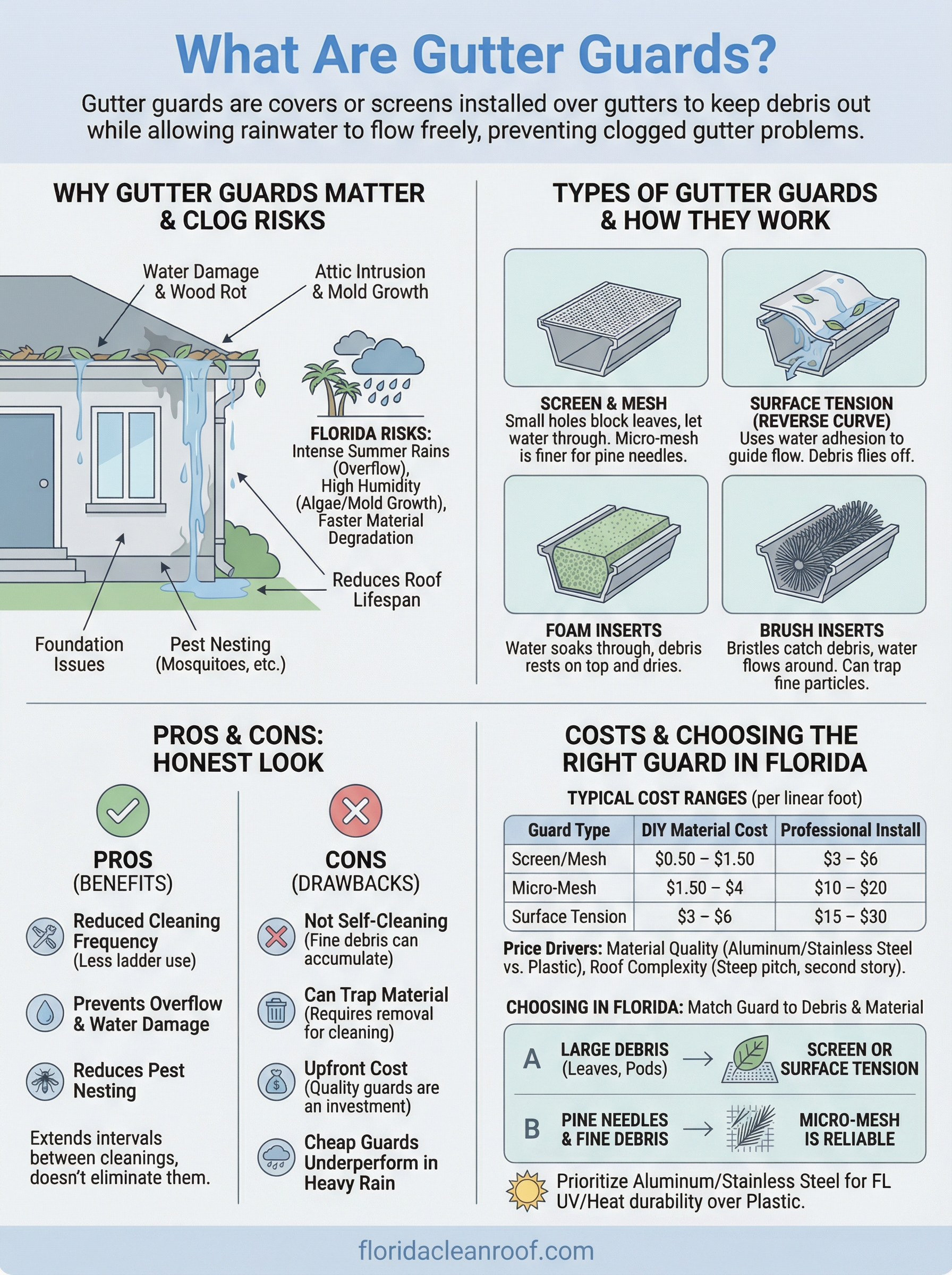
Your gutters do one job: move water away from your home’s foundation, walls, and roof. When they work, you never think about them. When they fail, the repair bills can run into the thousands, and the damage often shows up in places that have nothing to do with the gutter itself. Understanding what are gutter guards and why homeowners install them starts with understanding how much damage a clogged gutter can actually cause.
What happens when gutters clog
Leaves, seed pods, dirt, and roof granules collect in gutters over time. Once enough debris builds up, water has nowhere to go during a rainstorm. It pools in the gutter channel, spills over the edge, and runs down your fascia boards and exterior walls. Over time, that constant moisture causes wood rot, paint failure, and in serious cases, water intrusion into your attic or living space.
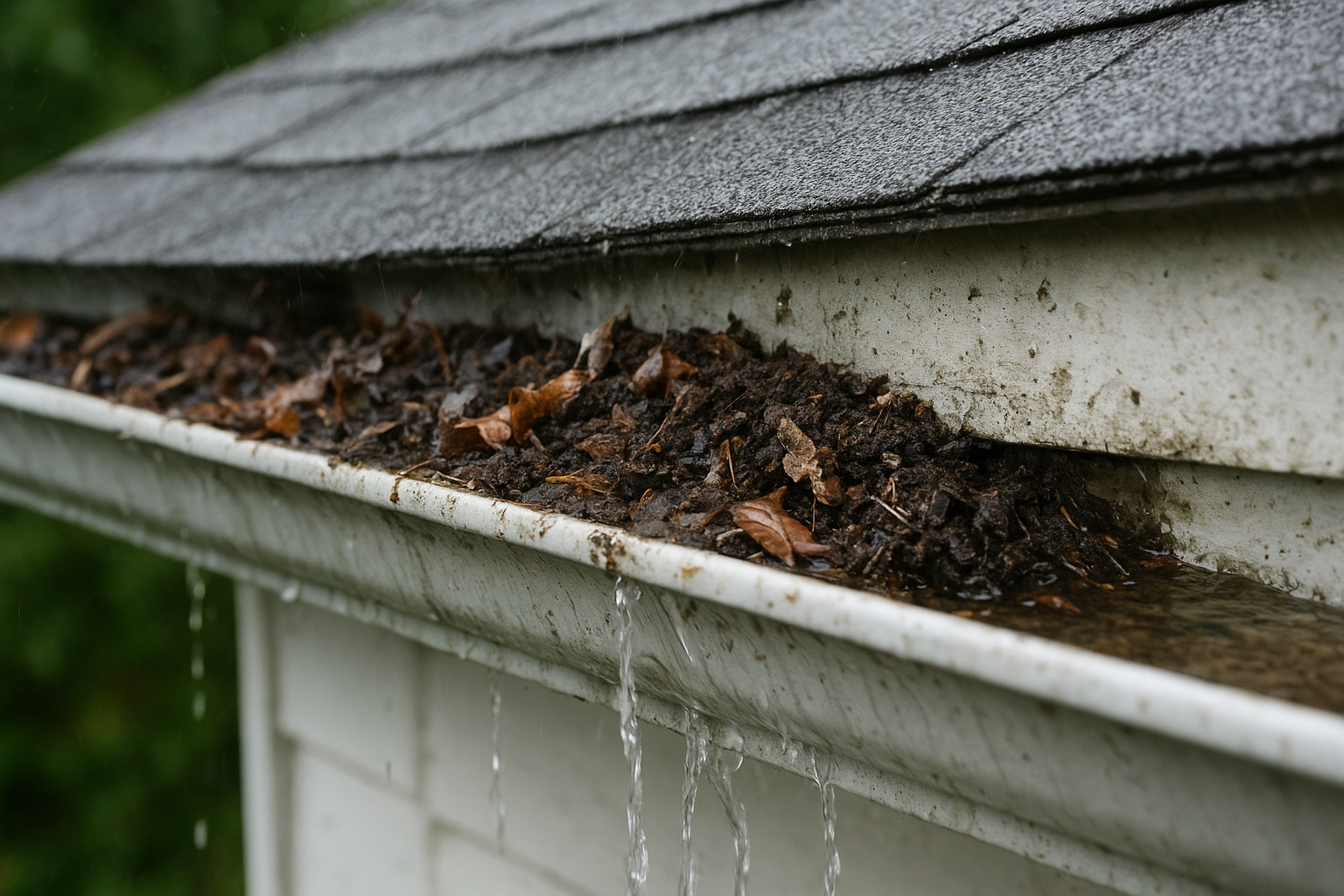
The weight of wet, compacted debris also puts physical stress on the gutter itself. Gutters can pull away from the fascia, which creates gaps where pests and water can both get in. Sagging gutters no longer drain at the right angle, so standing water sits inside the channel and breeds mosquitoes or accelerates rust and corrosion in metal gutters.
Clogged gutters are one of the most common and preventable causes of water damage to residential rooflines and foundations.
Florida’s climate makes clogged gutters a bigger risk
Florida homeowners deal with a combination of factors that makes gutter maintenance more demanding than in most other states. Summer rainstorms are intense and frequent, dropping several inches of rain in a short period. If your gutters are partially blocked when a storm hits, the volume of water overwhelms the system immediately.
Beyond rain volume, Florida’s year-round humidity and warm temperatures create ideal conditions for organic growth inside gutters. Mold, algae, and even small plants can take root in the wet debris sitting in a clogged gutter. That same organic growth is what causes the dark streaks you see on roofs across Southwest and Southeast Florida. When gutters overflow, that contaminated water runs across your roof tiles or shingles and accelerates the spread of algae and mildew on surfaces that should stay dry.
How this connects to your roof’s lifespan
Your roof and your gutters work as a system. A well-functioning gutter channels water off the roof surface quickly, reducing the time moisture sits against your tiles, shingles, and underlayment. When water backs up near the roofline, it can seep under shingles or into the grout lines of cement tiles, causing the kind of slow, hidden damage that shortens your roof’s lifespan significantly.
For homeowners who already invest in roof cleaning or a maintenance program, a clogged gutter can undo a lot of that work by reintroducing moisture and debris to a surface you just had treated. Protecting your gutters is part of protecting your entire roof system.
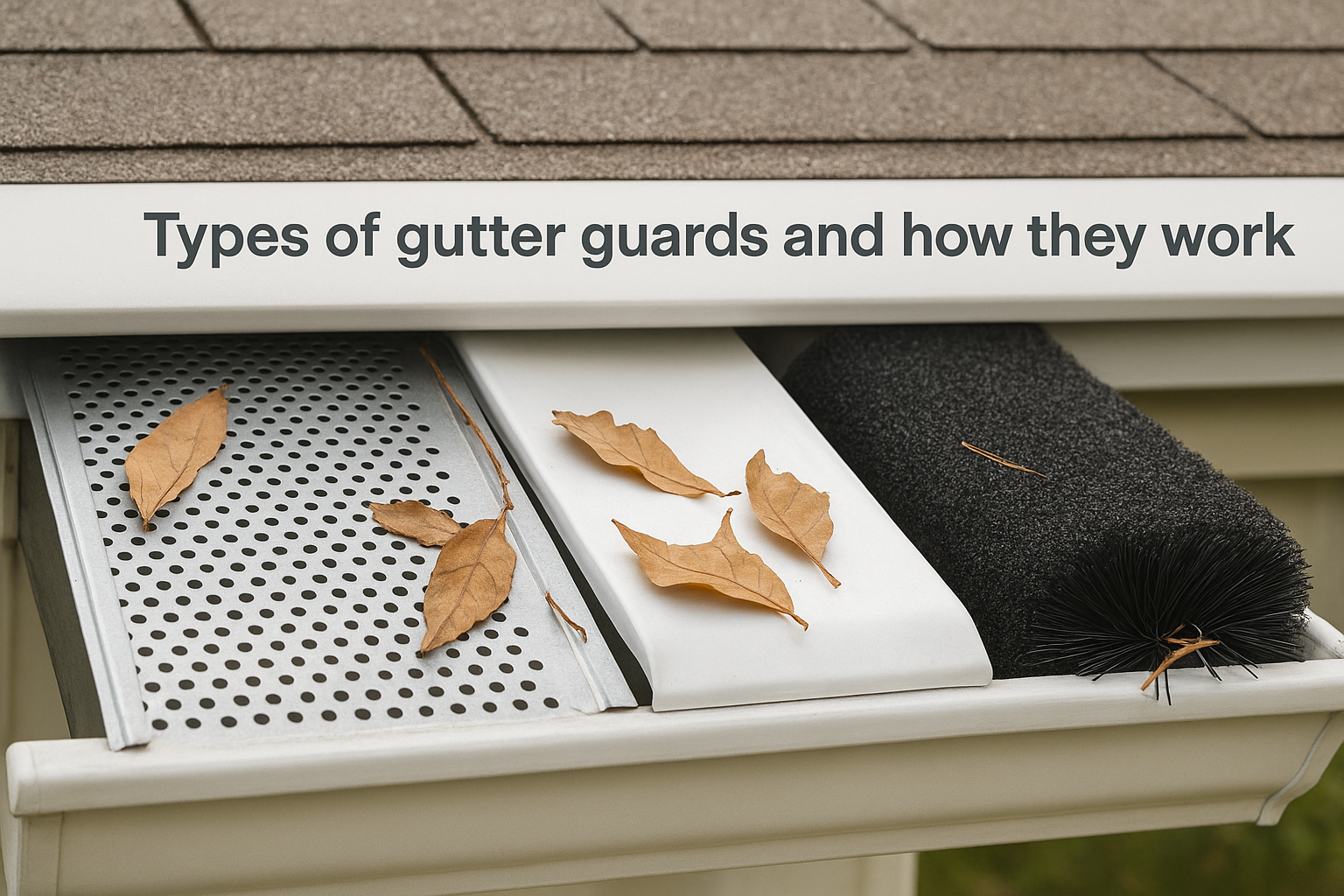
Types of gutter guards and how they work
Not all gutter guards work the same way. The core idea behind what are gutter guards is consistent across products, keep debris out while letting water in, but the mechanism differs significantly between types, and so does the level of maintenance each one requires afterward.
Screen and mesh guards
Screen guards are the most common option you’ll find at hardware stores. They sit across the top of your gutter channel and use small holes or perforations to let water through while blocking larger debris like leaves and twigs. Micro-mesh guards work on the same principle but use much finer material, which stops smaller debris like pine needles and shingle granules that standard screens miss. Micro-mesh tends to cost more, but it performs better in environments with mixed debris, and in Florida, mixed debris is exactly what you get.
Surface tension and solid cover guards
Surface tension guards, sometimes called reverse curve guards, use the physics of water adhesion to direct flow. Water clings to the curved surface and drops into the gutter, while leaves and debris fly off the edge. These work well in heavy rainfall but can struggle when wet debris sticks to the surface instead of falling off. Solid flat covers operate on a similar principle, directing water through a narrow channel or slot at the front edge of the cover.
Surface tension guards often require professional installation to angle correctly, which adds to the overall cost.
Foam and brush inserts
Foam inserts sit directly inside the gutter channel. Water soaks through the porous foam while debris rests on top and dries out before blowing away. Brush guards use a similar in-channel approach with cylindrical bristles that catch debris on the surface. Both options are inexpensive and easy to install yourself, but they tend to trap fine particles inside the material over time, which means they still require periodic cleaning to stay functional.
Pros and cons of gutter guards
Once you understand what are gutter guards and how each type functions, the next step is weighing whether they actually make sense for your specific home. No gutter guard eliminates maintenance entirely, and understanding both sides clearly will help you make a realistic, informed decision rather than one based on a product brochure.
The benefits of installing gutter guards
The strongest case for gutter guards is reduced cleaning frequency. Most homeowners without guards need to clean their gutters at least twice a year; with a quality guard installed, that interval drops significantly. Beyond convenience, guards help prevent the overflow and water damage described earlier, protecting your fascia boards, foundation, and roofline from the slow, cumulative harm that clogged gutters cause over time.
A well-chosen gutter guard can extend the time between cleanings from twice a year to once every two or three years, depending on your surrounding tree coverage and debris load.
Gutter guards also reduce the chance of pest nesting inside your gutters. Standing water and wet debris attract mosquitoes, birds, and even rodents. Keeping debris out removes the conditions that make gutters an appealing nesting spot, which matters in Florida’s warm climate where pest activity runs year-round and problems escalate faster than in cooler states.
The drawbacks you should know
The biggest limitation is that gutter guards do not make gutters self-cleaning. Fine debris, roof granules, and seeds still accumulate on top of or inside many guard types over time. Foam and brush inserts especially tend to trap fine material inside the product itself, which means you may actually need to remove the guard to clean underneath it, a job that takes longer than cleaning an open gutter.
Cost is another factor worth considering honestly. Lower-priced screen guards often underperform during heavy rain, allowing water to overshoot the gutter entirely instead of flowing in. Investing in higher-quality micro-mesh or professionally installed systems costs more upfront, but a cheap product can create more problems than it solves when Florida’s summer rainstorms arrive with full force.
Gutter guard costs and what affects the price
Understanding what are gutter guards is one part of the decision; knowing what you’ll pay is another. Prices range widely depending on the type of guard, the material, and whether you hire a professional or do the work yourself. A basic screen guard from a hardware store can cost as little as $0.50 per linear foot, while a professionally installed micro-mesh system runs $15 to $30 per linear foot or more, meaning a typical home’s full installation can total anywhere from a few hundred dollars to several thousand.
Cost by guard type
The type of guard you choose has the biggest single impact on your total project cost. The table below shows typical price ranges for a standard home with roughly 150 to 200 linear feet of gutters.
| Guard Type | DIY Material Cost | Professional Install |
|---|---|---|
| Screen/mesh | $0.50–$1.50/ft | $3–$6/ft |
| Micro-mesh | $1.50–$4/ft | $10–$20/ft |
| Surface tension | $3–$6/ft | $15–$30/ft |
| Foam inserts | $2–$4/ft | Rarely offered professionally |
| Brush inserts | $2–$4/ft | Rarely offered professionally |
What drives the price up or down
Material quality is the most consistent price driver across all guard types. Aluminum and stainless steel micro-mesh products cost more than plastic screens but hold up significantly better against Florida’s heat, humidity, and UV exposure. Plastic guards can warp or become brittle within a few years in direct sun, which makes the lower upfront cost much less attractive when you factor in replacement frequency over a full roof lifespan.
Labor adds cost when installation requires working around complex rooflines, valleys, or multiple downspout configurations. Homes with steep pitches or second-story gutters take more time to complete safely, which raises the installer’s quote. If your gutters also need cleaning or repairs before guards go on, expect those services to be billed separately and completed first before the guard installation begins.
Paying more upfront for a quality micro-mesh system typically costs less over time than replacing cheap guards every two to three years.
How to choose and install gutter guards in Florida
Florida homes face a specific combination of challenges that makes guard selection more important than in most markets. Year-round organic debris from palms, live oaks, and pine trees means your gutters see constant material in every season, not just fall. Understanding what are gutter guards and picking the right type for your property starts with honestly assessing what kind of debris hits your roof and gutters most.
Match the guard to your debris load
If your property has large trees dropping heavy leaves and seed pods, a standard screen or surface tension guard handles the bulk of the work and costs less to install. But if you have pine trees nearby, micro-mesh is the only reliable option because pine needles pass straight through wider screen openings and pack into the gutter channel just as fast as no guard at all.
- Large leaves and seed pods: screen or surface tension guards work well
- Pine needles and fine debris: micro-mesh handles both reliably
- Mixed debris: stainless steel micro-mesh is the most durable long-term choice
Choosing the wrong guard type for your debris load often creates the same clogging problems you were trying to avoid in the first place.
Installation considerations for Florida homes
Florida’s heat, humidity, and UV intensity make material selection as important as guard type. Plastic guards warp and crack faster in direct sun, so aluminum or stainless steel options hold up significantly better over a full roof lifespan in this climate. Before any guard goes on, your gutters need to be clean and properly pitched so water drains toward the downspouts. Installing guards over existing debris or a sagging gutter defeats the purpose entirely.
Professional installation makes sense when your home has second-story gutters or a complex roofline that makes safe ladder access difficult. A professional will also verify that your existing gutter system is in good condition before covering it, which protects your investment in the guards themselves.
Next steps
Now that you understand what are gutter guards, how the main types compare, and what affects the cost, you can make a confident, informed decision for your home. The right guard depends on your debris load, your budget, and the specific conditions of your Florida property, not on the most expensive product available. Match the guard to your situation, prioritize material quality over upfront savings, and make sure your gutters are clean and properly pitched before any guard goes on.
Your roof and gutters work as a connected system, and keeping both in good condition is the most reliable way to protect your home from Florida’s heat, humidity, and heavy rain. If you need your roof or gutters cleaned before installing guards, or if you want a professional assessment of your roof’s overall condition, the team at Florida Clean Roof can help you start from a clean, solid baseline and keep your home protected year-round.