A clogged downspout can turn a routine rainstorm into a real problem. Water backs up, overflows the gutters, and starts pooling near your foundation, none of which is good for your home. If you’ve noticed water spilling over the edges during a downpour, knowing how to unclog a downspout from the ground can save you time, money, and a trip up a ladder. The good news is that most blockages are fixable with basic tools and a little patience.
Here in Florida, downspout clogs happen frequently. Between the heavy summer rains, falling palm fronds, and organic debris that thrives in our humid climate, gutters and downspouts take a beating year-round. A blocked downspout doesn’t just cause water damage, it can also direct moisture toward your roof’s fascia and soffit, accelerating rot and creating conditions for mold and algae growth that spread to your roofing material. At Florida Clean Roof, we see firsthand how neglected drainage systems contribute to the kind of roof damage homeowners are trying to avoid.
This guide walks you through practical, ground-level methods to clear your downspouts yourself, no climbing required. We’ll cover the tools you need, step-by-step techniques for above-ground and underground pipes, and signs that the problem might need professional attention. Whether you’re a hands-on homeowner or just trying to handle an urgent backup before your next service appointment, these steps work.
What you need and when to stop and call a pro
Before you start figuring out how to unclog a downspout, gather your materials first. Having everything within reach saves you multiple trips back and forth and makes the whole process faster and safer. Most of the items on this list are inexpensive and available at any hardware store, so there’s no reason to improvise with the wrong tool and risk damaging your pipe.
Tools and materials to have ready
You don’t need specialized equipment for most downspout clogs. A garden hose with a high-pressure nozzle handles the majority of light-to-moderate blockages on its own. For tougher jobs, a plumber’s drain snake or hand auger gives you the reach and mechanical force you need to break up compacted debris without ever climbing a ladder.
Pull these items together before you start:
| Item | What it’s for |
|---|---|
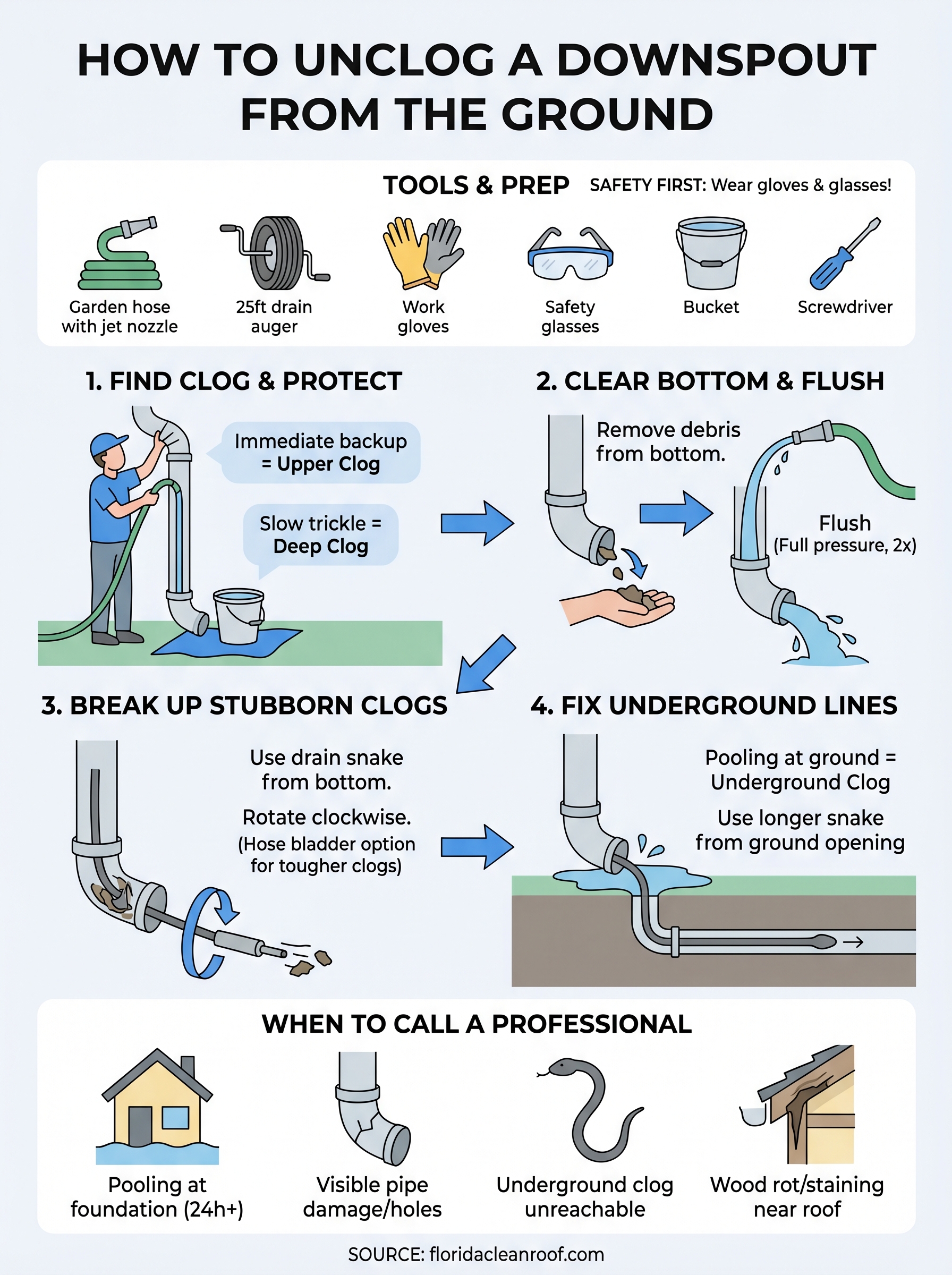
| Garden hose with jet nozzle | Flushing and pressure-testing the pipe |
| 25-foot hand drain auger | Breaking up deep or compacted clogs |
| Work gloves | Protecting hands from sharp debris |
| Safety glasses | Blocking water and debris blowback |
| Bucket or tarp | Catching debris at the downspout base |
| Flashlight | Inspecting the bottom opening before you start |
| Screwdriver or nut driver | Removing elbow joints if needed |
Wearing gloves and eye protection isn’t optional here. When you flush pressurized water into a blocked pipe, debris can eject from the opening with real force.
When to stop and call a professional
Some clogs go beyond what a garden hose and drain snake can resolve, and applying more pressure just risks cracking the pipe or forcing debris deeper into an underground line. If you run water into the downspout and it backs up immediately with zero movement, you’re likely dealing with a compacted blockage or a damaged pipe section that needs professional equipment.
Stop what you’re doing and call a pro if any of these situations apply:
- Water is pooling against your foundation and hasn’t cleared 24 hours after your attempt
- The downspout connects to an underground drain line and your snake can’t reach the obstruction
- You see visible pipe separation, corrosion, or holes anywhere along the downspout
- There’s moisture damage, staining, or soft wood near your roofline or soffit
Catching those warning signs early and bringing in a professional is the move that keeps a small drainage issue from growing into an expensive structural repair.
Step 1. Find the clog and protect your home
Before you touch a hose or a snake, spend a few minutes diagnosing where the blockage is sitting. Knowing whether the clog is near the top, in the middle of the pipe, or in an underground section tells you which tool to reach for first and saves you from applying the wrong fix. This is the step most homeowners skip, and it’s why they end up frustrated an hour later.
Locate where the blockage is sitting
Start by running your garden hose directly into the top of the downspout while a second person watches the bottom opening. If water pours out the base freely, the clog is likely in the gutters above, not the downspout itself. If water backs up immediately and doesn’t move, the blockage is in the upper section of the pipe. If water trickles out slowly and then stops, the obstruction is sitting deeper in the pipe or in an underground drain line.
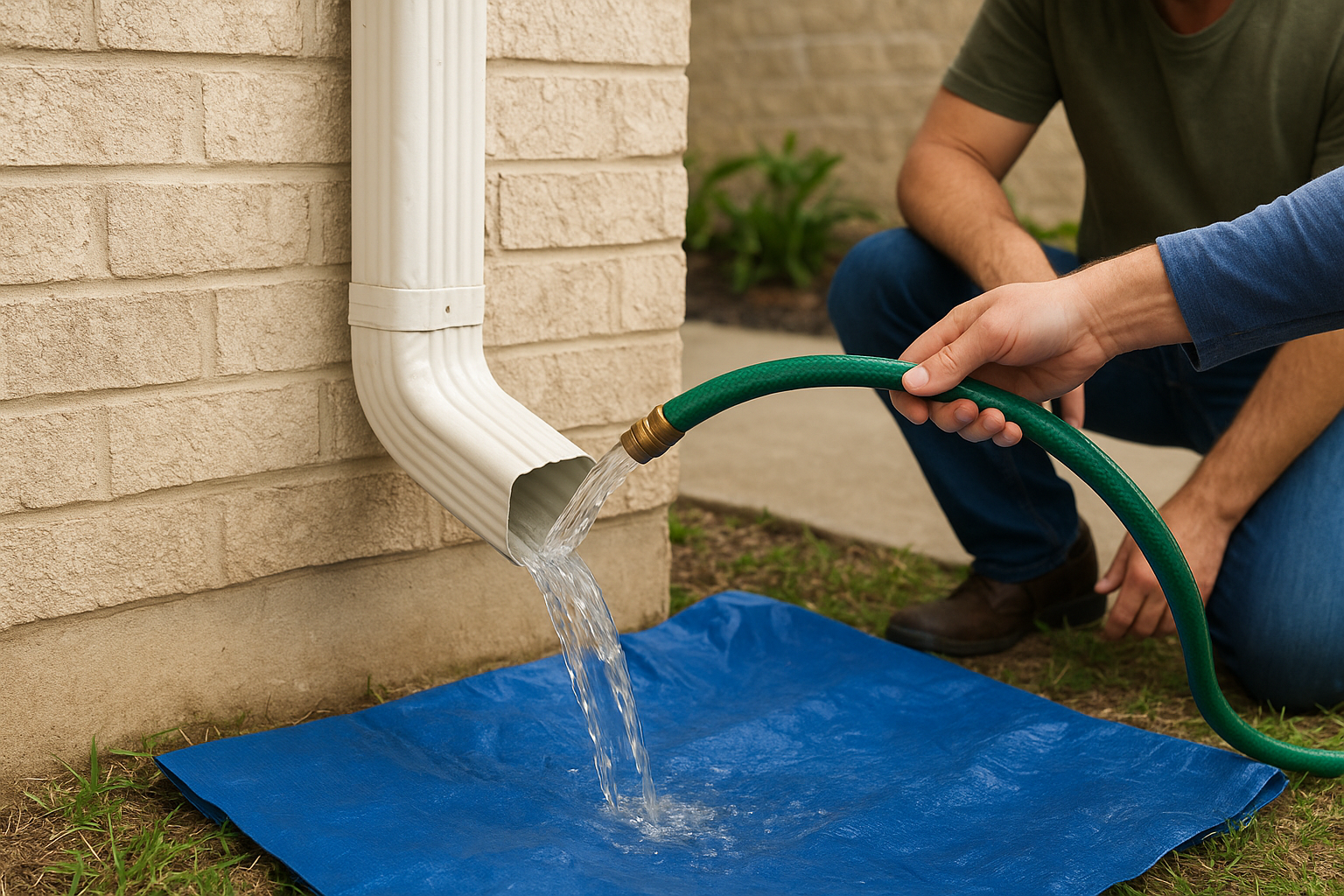
If you can hear a gurgling sound when the water backs up, that’s a strong indicator of a partial clog that can still be cleared from the ground without specialized equipment.
Protect the area before you start
Once you’ve identified where the clog likely sits, lay a tarp or bucket at the base of the downspout to catch whatever comes out when you flush or snake the pipe. In Florida’s humid climate, that debris often includes decomposed leaves, algae clumps, and compacted organic matter that can stain concrete driveways or kill nearby plants if it pools. Knowing how to unclog a downspout the right way means protecting your property before you start, not after.
Step 2. Clear the bottom opening and flush it
With the tarp in place and the clog location identified, start at the bottom of the downspout before you do anything else. The bottom elbow or outlet is where debris compacts most easily, and clearing it first gives whatever you flush from above somewhere to actually go.
Remove debris from the bottom opening
Put on your gloves and use your fingers or a screwdriver to pull out any visible debris packed into the bottom elbow or opening. Leaves, mud, and clumped organic matter often form a plug right at the curve where the pipe turns toward the ground. If the elbow is secured with screws, remove them, pull the elbow off, clear it out by hand, and reattach it before moving on.
Clearing the bottom opening first prevents a pressure buildup that could force the clog deeper into an underground drain line when you flush from above.
Flush from the top down
Once the bottom is clear, insert your garden hose as far into the top of the downspout as it will reach and turn the water on full pressure. Hold the hose steady and let the water work. You’re looking for a strong, steady flow out of the bottom opening, which tells you the pipe is clear. If water backs up after 20 to 30 seconds of full pressure, the blockage is still holding. Turn the hose off, let the backed-up water drain, and repeat the flush once more. Two rounds of flushing resolve most straightforward clogs when you’re learning how to unclog a downspout without climbing a ladder.
Step 3. Break up stubborn clogs without a ladder
When two rounds of flushing haven’t cleared the pipe, the debris is compacted enough that water pressure alone won’t move it. At this point, you need a tool that can physically break up the blockage rather than just push water against it. This is where knowing how to unclog a downspout properly pays off, because using the right approach here prevents you from forcing the clog deeper into the system.
Use a drain snake from the bottom opening
Feed a 25-foot hand drain auger into the bottom of the downspout, working it upward through the pipe. Rotate the handle clockwise as you push forward so the tip bores into the debris rather than glancing off it. When you feel resistance, hold your position and keep rotating without forcing additional length into the pipe. Once the tip breaks through, slowly pull the snake back out, which drags the loosened debris with it. Drop whatever you pull out onto the tarp, then flush the pipe again with your hose.
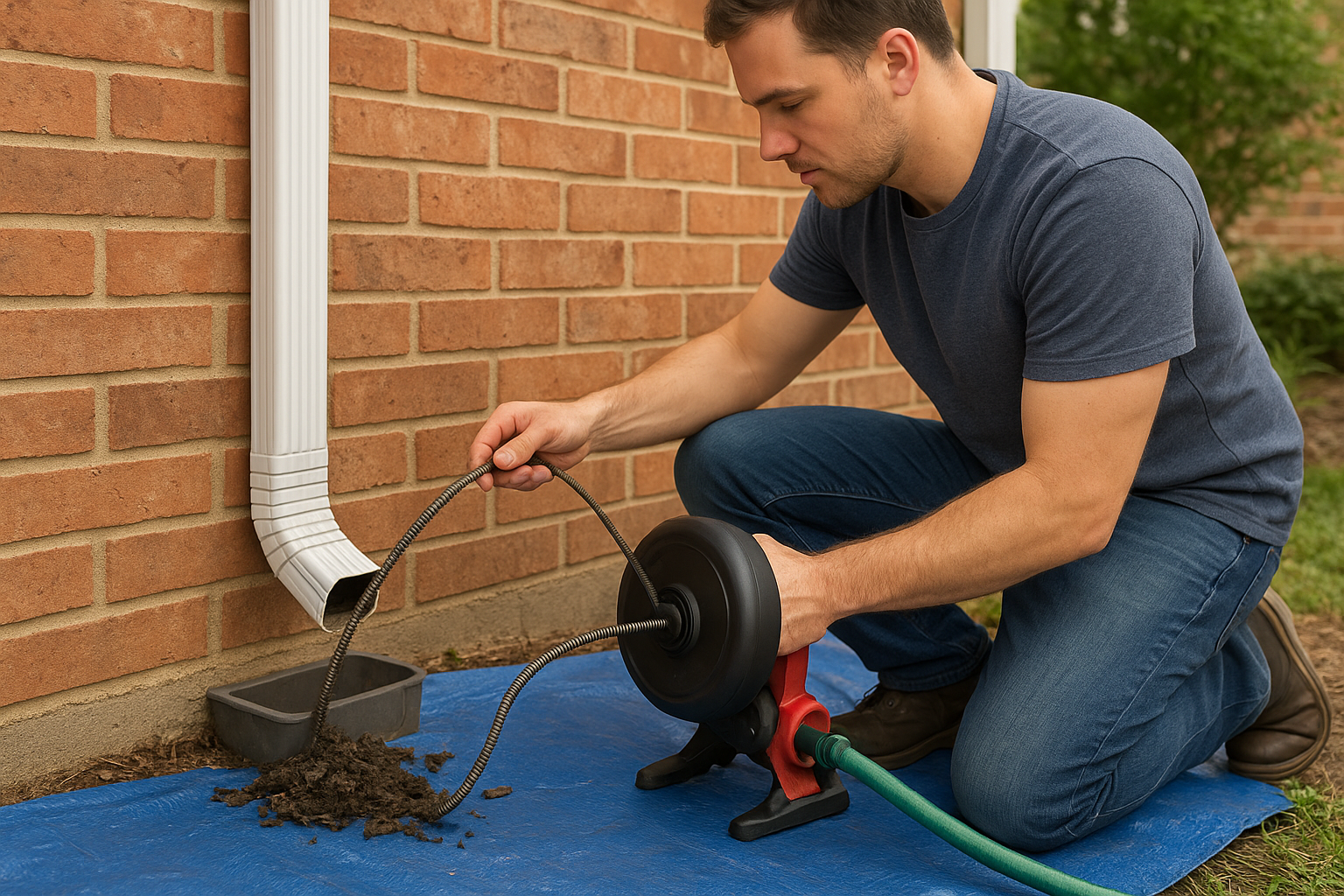
Pulling the snake out slowly matters. Yanking it back fast can scatter debris inside the pipe and repack it further down.
Try a hose bladder for deeper resistance
If the snake moves freely but water still won’t drain after flushing, attach a hose bladder, also called a drain flusher bag, to your garden hose and insert it into the bottom opening. When you turn on the water, the bladder expands to seal the pipe and releases a high-pressure burst that pushes compacted material downward and out. This tool works well on organic clogs that a snake tip can’t fully grab.
Step 4. Fix underground downspout line blockages
Underground downspout lines are the hardest part of the drainage system to diagnose and clear because you can’t see what’s happening inside. If you’ve flushed from the top, snaked from the bottom, and water still pools at the base of your downspout, the blockage has moved past the vertical pipe and into the buried drain line that carries water away from your foundation.
Identify whether the underground line is the problem
The clearest sign of an underground blockage is water that drains slowly from the downspout but pools at the point where the pipe enters the ground. That pooling tells you the above-ground section is clear but the buried pipe is blocked. Check that entry point closely. If the soil around it is saturated or you see water pushing back up through the ground, the underground line has a serious obstruction that needs immediate attention.
Do not keep flushing large volumes of water into a confirmed underground blockage. Forcing more water into a sealed system saturates the surrounding soil and increases pressure against your foundation.
Clear the underground pipe with the right tool
Learning how to unclog a downspout underground requires a longer drain snake than what you’d use above ground. Feed a 50-foot electric or hand-powered auger directly into the underground pipe opening at ground level and work it forward in slow, steady rotations. When the tip meets resistance, hold and rotate before pushing further. Once you break through, flush the line with your hose for at least 60 seconds at full pressure to push the loosened material through and out to the street drain or discharge point.
Next steps
You now have a complete, ground-level process for how to unclog a downspout, from locating the blockage and protecting your property to clearing underground drain lines with the right tools. Work through the steps in order, start at the bottom opening, flush before you snake, and stop if you see signs of pipe damage or foundation saturation.
Keeping your downspouts clear is only one part of protecting your roof in Florida’s climate. Mold, algae, and organic debris build up fast in our heat and humidity, and a clean drainage system paired with a clean roof keeps moisture from getting a foothold on your home. If you want a professional set of eyes on your roof’s condition and drainage, the team at Florida Clean Roof has helped homeowners across Southwest and Southeast Florida protect their roofs for over 20 years. Schedule a roof cleaning or inspection and get ahead of the next rainy season.