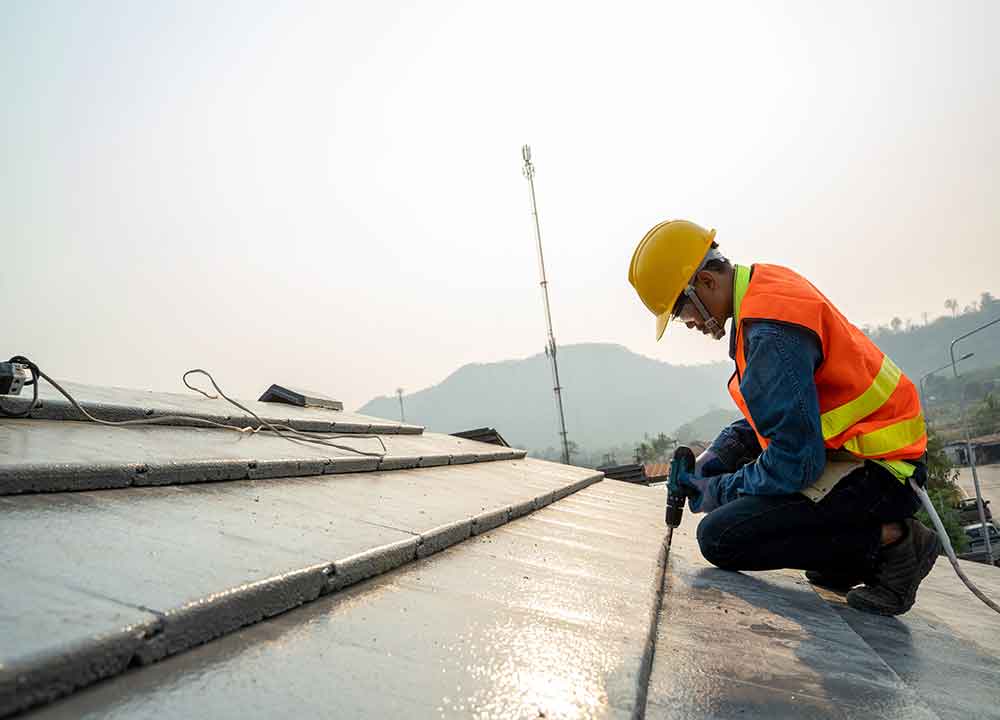
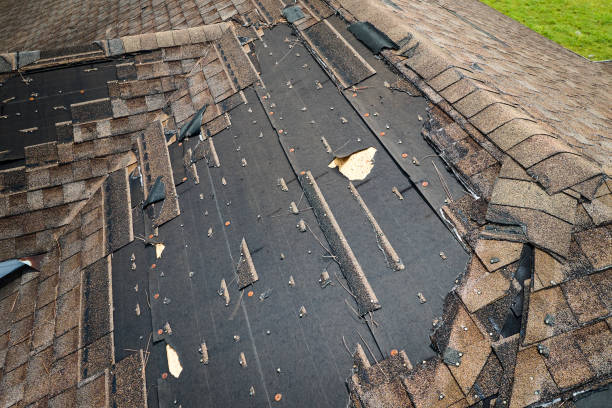
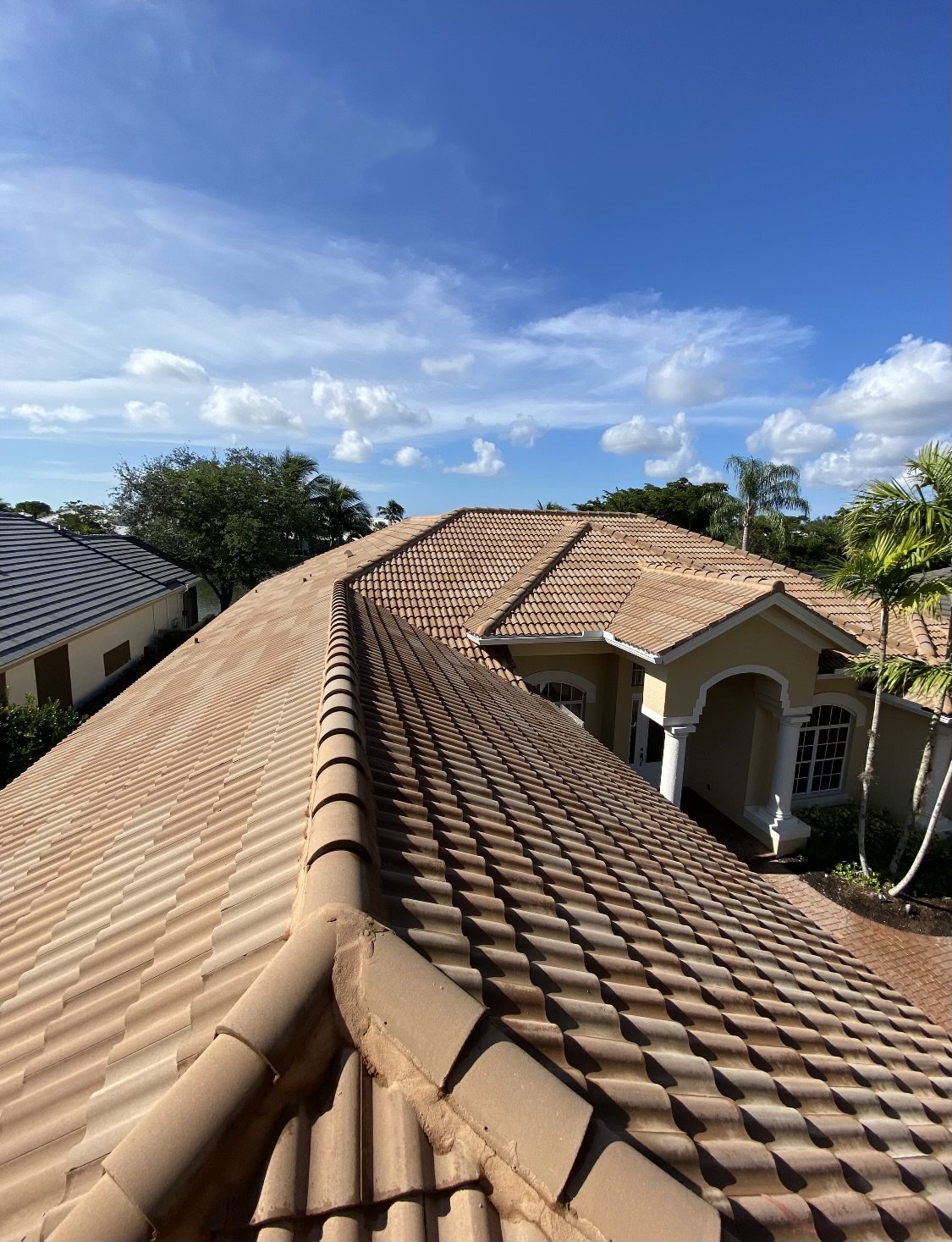
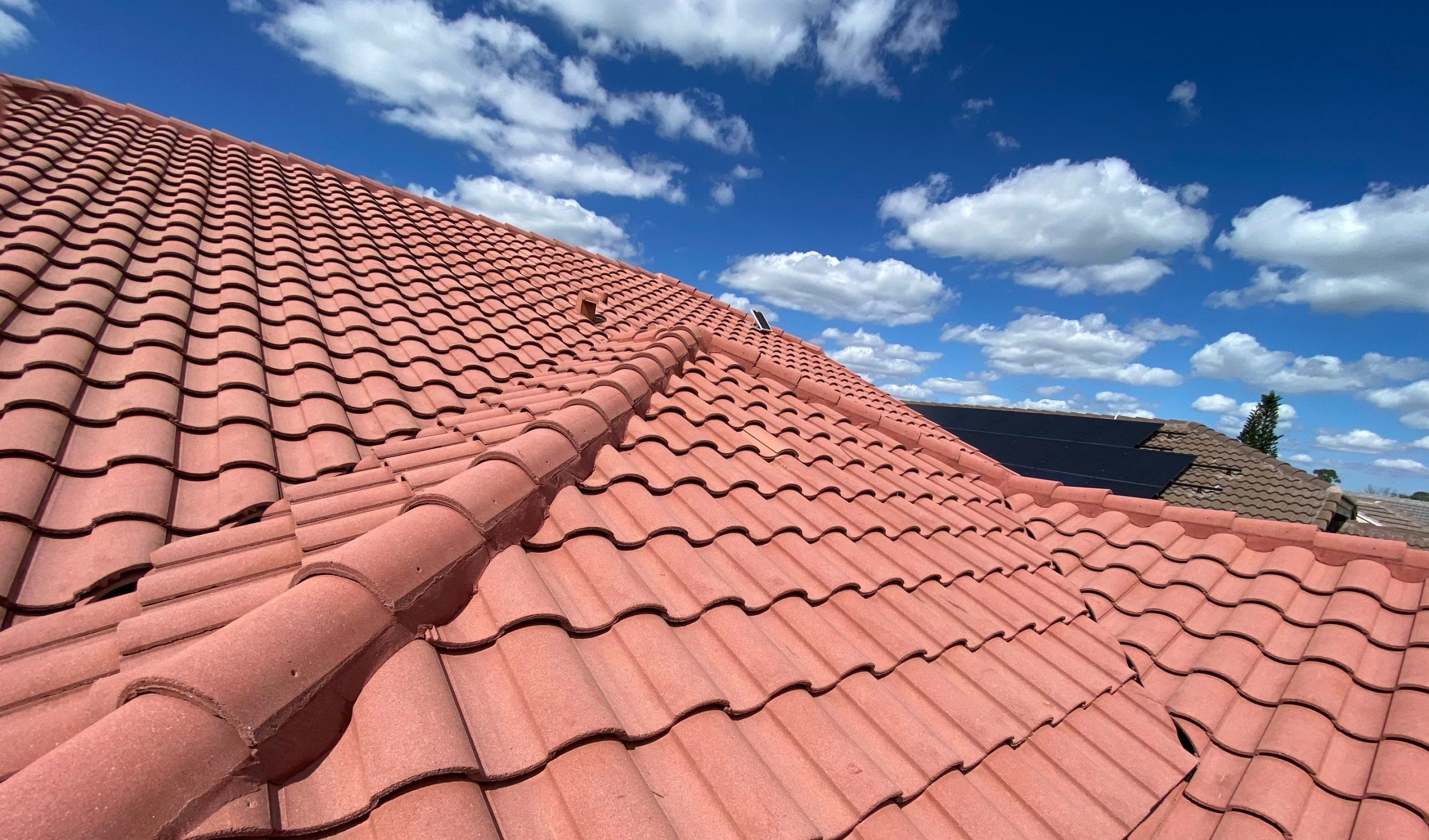
Walk through almost any Fort Myers neighborhood after a major storm and the story is written on the rooftops. Some held. Others lost shingles, peeled back at the edges, or collapsed inward at the low points where water had been quietly pooling for years. The difference between those two outcomes rarely comes down to luck. It almost always comes down to whether the right roof system was installed for the right property, and whether it was maintained properly before the storm arrived.
Both systems work in Southwest Florida when installed correctly. Both fail when the wrong one gets chosen for the wrong property, or when the installation cuts corners on materials and drainage. Fort Myers properties face a specific combination of threats that makes this decision more consequential than it would be in most other parts of the country: hurricane-force winds, six months of intense UV exposure, and a rainy season that drops several inches of water in a single afternoon.
This guide compares flat roofs and pitched roofs across every dimension that matters for Fort Myers homeowners and property owners. You will learn how each system performs in Southwest Florida’s climate, which situations call for each option, what the installation process looks like under Florida Building Code requirements, and the most common mistakes that lead to early failure in this region.
Understanding Flat Roofs and Pitched Roofs in Fort Myers, FL
A flat roof is not completely flat. It carries a slight slope, typically between one-quarter and one-half inch per foot, designed to direct water toward drains or scuppers rather than letting it pool. In Fort Myers, flat roofs appear most commonly on commercial buildings, modern residential designs, and low-slope additions like garages, lanais, and covered patios.
A pitched roof rises at a steeper angle, shedding water rapidly off the surface and into gutters. Pitch is measured as the number of inches the roof rises for every 12 inches of horizontal run. Most Fort Myers residential homes carry pitches between 4:12 and 6:12, though steeper profiles appear in newer construction designed to handle high-wind events.
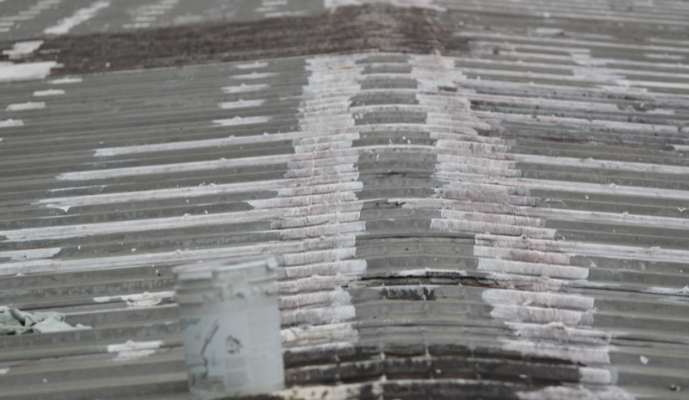
The surface materials differ significantly between the two systems. Flat roofs in Southwest Florida typically use TPO (thermoplastic polyolefin), modified bitumen, or coated systems including elastomeric and silicone coatings. For a technical overview of how these coatings extend roof life and improve energy performance in Florida’s heat, the Wikipedia overview of roof coatings covers the material science behind the most common options used across Fort Myers and Southwest Florida.
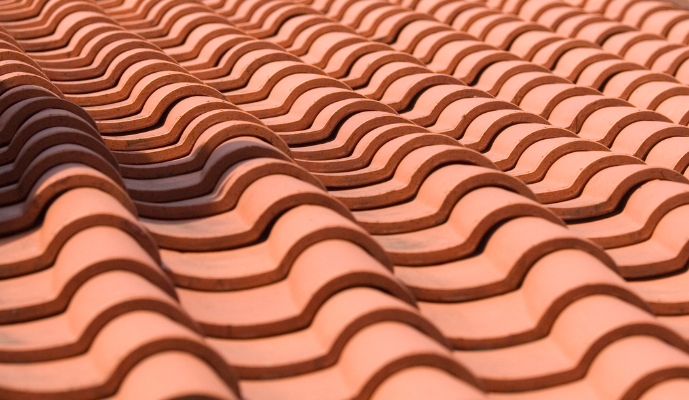
Pitched roofs in Fort Myers use asphalt shingles, metal panels, or concrete and clay tile. Each material carries different wind ratings, lifespans, and maintenance requirements under the conditions specific to Southwest Florida. The choice between systems begins with understanding what your property actually needs, not simply copying what your neighbor built.
Which Roof System Fort Myers Homeowners and Businesses Actually Need
Consider a commercial property owner in downtown Fort Myers with a 1980s-era flat roof on a two-story retail building on Cleveland Avenue. After Hurricane Irma in 2017, the modified bitumen membrane developed multiple small punctures from wind-driven debris. Water worked its way into the insulation layer for two rainy seasons before the interior ceiling collapsed during a routine afternoon storm. The repair cost exceeded the price of a full roof replacement with a modern coated TPO system, which would have carried a 20-year warranty and met current Florida Building Code wind standards.
That scenario illustrates the core problem with aging flat roofs in Southwest Florida: they fail silently. Pitched roofs tend to show damage visibly, through missing shingles, broken tiles, or displaced flashing. Flat roof failures often hide under standing water or inside insulation layers until significant interior damage has already occurred.
A flat roof makes the most sense for Fort Myers properties in these situations:
- Commercial buildings and warehouses where interior height takes priority over roof pitch.
- Modern residential designs with rooflines that architectural drawings specify as low-slope or flat.
- Low-slope additions and covered structures where a pitched roof would create drainage conflicts with the main structure.
- Properties requiring rooftop equipment access, such as HVAC units on commercial buildings in Fort Myers’s commercial districts.
A pitched roof makes more sense for:
- Traditional single-family homes in Fort Myers neighborhoods like McGregor, Pelican Preserve, or Gateway.
- Properties in high-wind exposure areas where steep pitch improves wind uplift resistance.
- Homes where asphalt shingles or metal roofing already define the aesthetic and replacement follows the same system.
- Residential properties where attic space is needed for HVAC equipment, insulation, or storage.
When an existing flat roof in Fort Myers has suffered repeated roof leak repair Fort Myers calls over several years, the pattern often signals that the original system was undersized, improperly drained, or installed with substandard materials. At that point, a full evaluation determines whether coating and repair extends the life cost-effectively or whether replacement is the smarter investment.
How Flat Roof and Pitched Roof Installation Works in Fort Myers
Both systems require building permits before any work begins, and both must comply with the Florida Building Code roofing requirements for wind resistance in Southwest Florida’s high-wind exposure zone. One thing Fort Myers homeowners frequently do not expect: the permit review process here often takes longer than in other Florida cities because inspectors apply the stricter standards required for the coastal wind exposure category. Factor that into your timeline before hurricane season.
Flat Roof Installation – Step by Step:
- Structural and drainage assessment – The contractor evaluates the decking condition, existing insulation, drain locations, and slope adequacy. In Fort Myers, improper drainage is the leading cause of flat roof failure – afternoon storms during the rainy season can drop two inches of rain in under an hour, and a drain layout designed for light rain simply cannot keep up.
- Permit application – The contractor submits plans showing the system specification, wind uplift calculations, and compliance with Florida Building Code Section 1507 for low-slope roof coverings. Skipping this step is common among storm-chasing contractors who work quickly and disappear, leaving homeowners with unpermitted work that voids insurance coverage.
- Tear-off or overlay decision – Florida Building Code limits the number of roof layers a structure can carry. Most Fort Myers properties require full tear-off before re-roofing to meet current wind uplift requirements. Contractors who pitch an overlay instead of tear-off are often cutting costs at your expense.
- Membrane or coating installation – The new surface system goes down according to manufacturer specifications and Florida Building Code requirements. TPO membranes are heat-welded at seams for a watertight bond. Coated systems require correct priming and mil-thickness application, underapplied coatings fail faster than the substrate they were meant to protect.
- Drain and flashing completion – Every penetration, edge, and drain receives new flashing and sealant. In Fort Myers, this is where flat roofs most often fail years later – a shortcut at the flashing stage creates a slow leak that stays hidden until it becomes a ceiling collapse.
- Inspection and permit closeout – A Florida building inspector reviews the completed installation before the permit closes. Never accept a finished roof in Fort Myers without a signed inspection record – it is the only documentation that proves the work was done to code.
Pitched Roof Installation – Step by Step:
- Full inspection and measurement – The contractor documents existing conditions, measures all roof planes, and flags any decking damage. In Fort Myers, decking inspection matters especially on homes built before 2002, when Florida Building Code wind attachment requirements were significantly tightened after Hurricane Andrew’s lessons were finally written into law.
- Permit and material selection – Material selection must meet minimum wind speed ratings for Fort Myers’s coastal exposure category, which exceeds the national baseline. Architectural shingles rated for 130 mph or higher are the practical minimum for any pitched roof in Southwest Florida – standard 3-tab shingles simply are not built for conditions here.
- Tear-off – Old shingles, underlayment, and compromised decking sections are removed. Inspecting the exposed decking carefully is non-negotiable in Fort Myers, where humidity and annual storm exposure accelerate hidden rot in ways that do not show up until the surface is pulled back.
- Underlayment installation – High-performance synthetic underlayment rated for Florida’s wind and moisture conditions goes down before any surface material. This layer acts as the last line of defense when surface material is lost in a storm, and it matters more in Fort Myers than almost anywhere else in the country.
- Surface material installation – Shingles, metal panels, or tile go down according to Florida Building Code fastening requirements, which specify nail patterns, fastener types, and overlap dimensions set specifically for Southwest Florida’s wind loads. The fastening pattern alone can mean the difference between a roof that survives a hurricane intact and one that loses sections in the first serious gust.
- Final inspection – The building inspector signs off on the completed installation, the permit closes, and you receive documentation for your insurance carrier. That inspection record also protects you if a future buyer’s inspector questions the work.
Common Mistakes Fort Myers Property Owners Make Choosing and Maintaining Their Roof System
These mistakes appear repeatedly in Fort Myers and across Southwest Florida, and each one costs significantly more to fix than it would have cost to avoid.
- Choosing system type based on upfront cost alone – A flat roof membrane that saves money at installation but carries no wind uplift rating for Southwest Florida’s exposure zone will fail in the first serious storm. The system must be specified for Fort Myers conditions, not just the lowest bid.
- Skipping the drainage evaluation on flat roofs – Fort Myers receives intense, concentrated rainfall during the rainy season. A flat roof that drains adequately in a light rain can pond several inches of water during a typical afternoon storm in August. Drain capacity must be calculated for peak local rainfall rates, not average conditions.
- Using shingles rated below Florida’s wind requirements on pitched roofs – Standard 3-tab shingles rated for 60 mph wind are not appropriate for Fort Myers. Architectural shingles rated for 130 mph or higher are the baseline specification for any pitched roof in Southwest Florida’s wind exposure zone.
- Assuming a coating fixes a structurally failing flat roof – Elastomeric and silicone coatings extend the life of a sound membrane in good condition. They do not repair failing seams, compromised flashing, or deteriorated insulation. Coating over a failing system delays the problem while the damage worsens underneath.
- Hiring contractors who skip the permit process – Unpermitted roof work in Fort Myers creates serious liability during property transactions and can void homeowner insurance coverage entirely. Always confirm the permit is pulled before work begins.
Pro Tip: Before choosing between flat and pitched, walk your property after the next heavy rain and look for ponding water on any existing flat surfaces, overflowing gutters on pitched sections, and any soft spots on covered patios or additions. What you find during a Southwest Florida rainstorm tells you more about your roof’s actual condition than any dry-weather inspection.
Southwest Florida Factors That Change the Flat vs Pitched Decision
Fort Myers sits in a unique position on the Florida map. The Gulf of Mexico to the west, Charlotte Harbor to the north, and the Everglades to the south create a moisture-heavy environment that accelerates roofing material degradation faster than almost anywhere else in the continental United States. Every roofing decision in Southwest Florida needs to account for five local factors that do not appear in national roofing guides.
Hurricane wind uplift requirements – Southwest Florida falls within Florida’s Wind-Borne Debris Region, which triggers High-Velocity Hurricane Zone provisions under the Florida Building Code roofing requirements. Both flat and pitched systems must meet specific uplift resistance values. Flat roof membranes require tested attachment patterns. Pitched roof shingles require specific nail counts and patterns. These are not optional upgrades in Fort Myers – they are legal minimums.
Salt air corrosion – Properties within 10 miles of the Gulf in Fort Myers neighborhoods like Punta Rassa, Fort Myers Beach, and Cape Coral face accelerated corrosion on every exposed metal component. Flat roof systems using metal edge details and penetration flashings require marine-grade or coated metals in these locations. Pitched roofs using metal roofing panels need coatings rated specifically for coastal salt air exposure.
UV intensity and heat loading – Fort Myers receives UV radiation at maximum intensity for most of the year. Dark-colored flat roof membranes can reach surface temperatures above 180 degrees Fahrenheit in summer, which accelerates membrane aging and drives up cooling costs significantly. Reflective coatings and cool-roof-rated membranes are a practical necessity in Southwest Florida, not a luxury upgrade.
Rainy season drainage demands – June through September, Fort Myers can receive six to eight inches of rainfall in a single storm event. Flat roofs must be designed with drain capacity that handles these peak flows, not just average annual rainfall figures. Pitched roofs need gutters sized and sloped correctly for Fort Myers rainfall intensity, with downspout discharge directed well away from the foundation.
Insurance implications – Southwest Florida insurers examine roof type, age, and material closely when setting premiums and coverage terms. Metal roofing systems on pitched roofs typically command the best insurance rates in the region due to their wind resistance and longevity. For shingle replacement Fort Myers projects, upgrading to impact-rated architectural shingles can reduce annual premiums meaningfully compared to standard shingle systems.
For properties considering a switch from flat to pitched, or replacing a failing flat roof system with a modern coated membrane, understanding the full range of options available for metal roofing Florida Fort Myers properties helps narrow down the right specification for your building type, location, and budget.
The flat roof vs pitched roof decision for Fort Myers Florida homes is not a universal answer, it is a property-specific calculation that weighs building type, drainage conditions, wind exposure, and long-term maintenance expectations. Both systems perform well in Southwest Florida when specified correctly and installed to current Florida Building Code standards.
What kills roofs in Fort Myers is not the system type. It is the wrong system chosen for the wrong property, installed without permits, by a contractor who did not account for Southwest Florida’s actual wind and rainfall loads. Getting those fundamentals right from the beginning is what separates a roof that lasts 30 years from one that requires roof leak repair Fort Myers calls every season.
Floridacleanroof has worked on both flat and pitched systems across Fort Myers and Southwest Florida. The team knows what each system demands in this climate and what the Florida Building Code requires before a single shingle or membrane goes down. If you are weighing your options or dealing with a roof that has already given you problems, the consultation starts the conversation.