I get this call about three times a week.
A homeowner in Cape Coral or Fort Myers hired someone with a pressure washer — sometimes a neighbor’s recommendation, sometimes the cheapest quote on Facebook — and now they’ve got cracked barrel tiles, a water stain spreading across the ceiling of their lanai, and a contractor telling them the underlayment is soaked. The roof cleaning cost them $300. The repairs are going to cost $3,000.
I’m Karey Woolsey. I’ve been cleaning and repairing tile roofs in Southwest Florida since 2004, and I hold a Florida roofing contractor’s license. I’m not writing this to scare you away from roof cleaning — your roof absolutely needs to be cleaned, especially in our climate. I’m writing this because the damage I see from improper pressure washing is real, it’s common, and it’s almost always completely avoidable.
Why pressure washing and tile roofs don’t mix
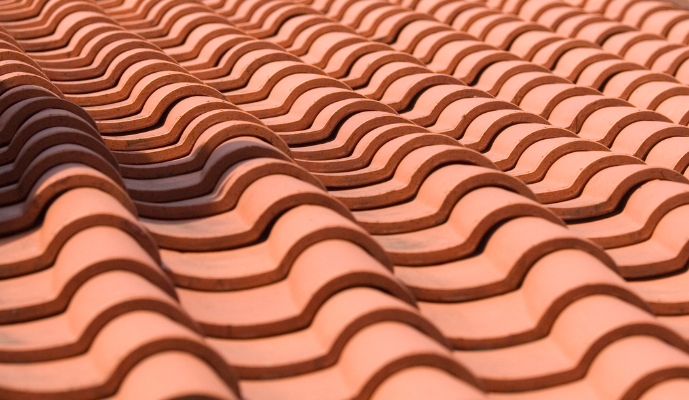
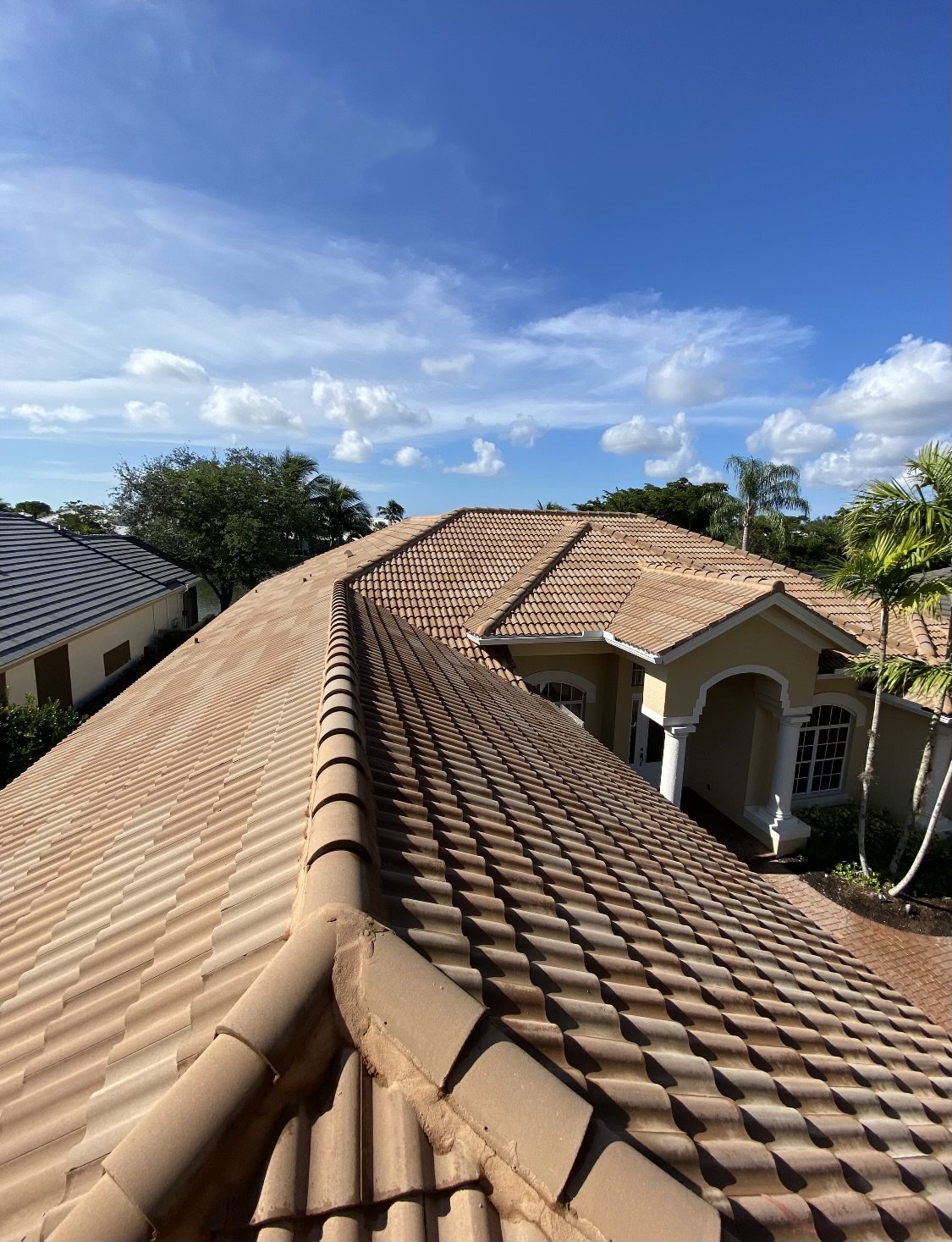
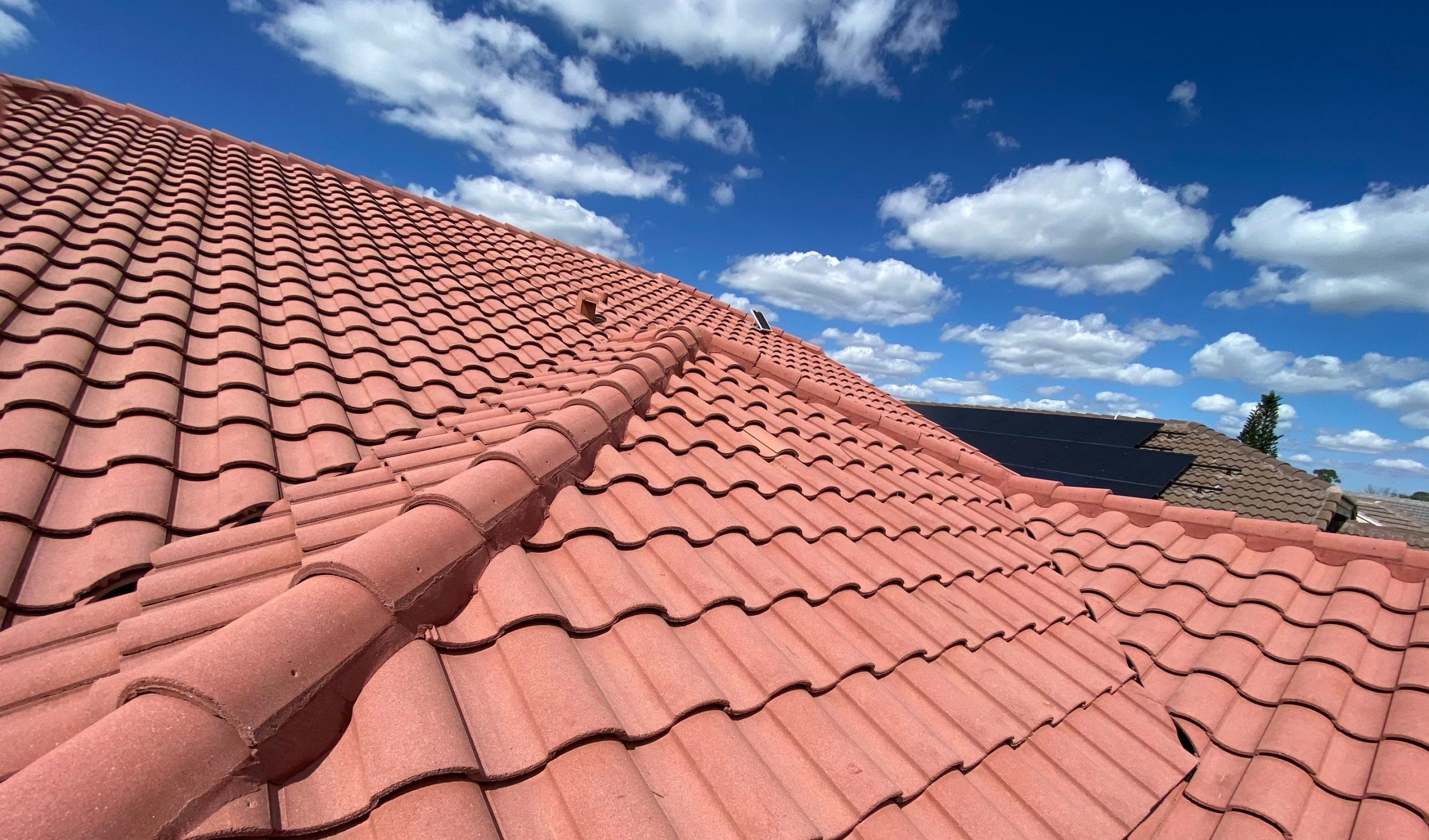
Tile roofs — whether you have barrel clay tiles, flat concrete tiles, or the S-shaped tiles you see all over the Sandoval and Cape Harbour communities — are designed to shed water, not withstand a direct blast of it.
A standard pressure washer runs between 2,000 and 4,000 PSI. When you aim that at a tile roof, a few things happen almost immediately:
The water goes where it’s not supposed to go. Tile roofs work by overlapping — water hits a tile and runs off the edge to the next one below. High-pressure water ignores that overlap entirely and gets driven sideways and upward, underneath the tiles, past the underlayment, and into the roof deck. You won’t see that water on the day of cleaning. You’ll find it six weeks later when the rainy season hits and a brown stain appears on your ceiling.
Concrete tiles crack. Cape Coral and Fort Myers homes have a huge share of concrete barrel tile roofs, and concrete looks tougher than it is. After years in Florida’s heat and UV exposure, tiles become brittle. A 3,000 PSI stream aimed directly at the surface — especially from a standing position on top of the roof — creates localized stress fractures. Sometimes they’re visible. Often they’re hairline cracks you can’t see until they open up during a hurricane.
The underlayment never fully dries. Florida’s humidity means any moisture that gets beneath your tiles stays there longer than you’d expect. Wet underlayment is a breeding ground for mold, and persistent moisture accelerates the breakdown of the waterproof membrane that actually keeps your home dry. A roof that looks clean from the street can be rotting underneath.
What softwash does instead — and why it works better
Our softwash system uses roughly 60–80 PSI — about the same pressure as a garden hose. The cleaning does not come from force. It comes from chemistry.
We apply a biodegradable solution specifically formulated for Florida’s roof conditions. The active ingredient kills Gloeocapsa magma — the cyanobacterium responsible for the black streaks you see on virtually every roof in Southwest Florida — at the cellular level. We’re not washing the stain away. We’re killing the organism that creates it.
That’s why the results last dramatically longer. Pressure washing pushes organic growth off the surface. Softwash eliminates it. In our climate, where heat and humidity mean algae and mold return fast, that difference is typically 4 to 6 times more cleaning time between services.
The solution is safe for your landscaping. We pre-wet plants before application and rinse them afterward. In 20 years, I’ve yet to have a customer lose a plant from our process — we have heard from plenty of customers who lost plants from other companies using pressure washing and bleach without protection.
Does this apply to every roof type?
For the most common roof types in our service area, here’s how we approach each one:
Concrete and clay barrel tile (most Cape Coral and Fort Myers homes)
Softwash only. The tile itself is durable but the system relies on water following a precise path. High pressure disrupts that path. We clean the entire surface, including the mortar ridges, valleys, and rake edges without setting foot on the tiles wherever possible.
Flat concrete tile (common in gated communities like Pelican Preserve, Gateway)
Same approach — softwash solution, low pressure rinse. Flat tiles have even less margin for water intrusion than barrel tiles because there’s less natural drainage angle built into the design.
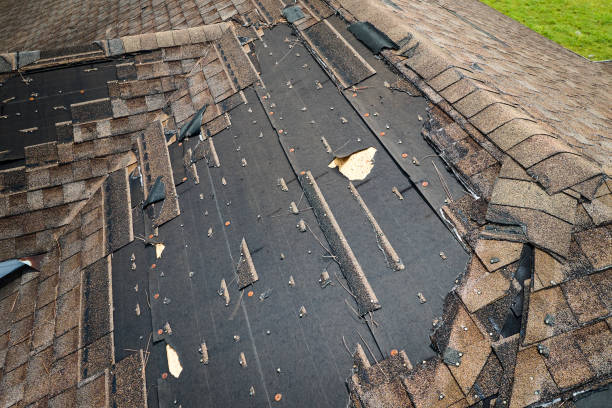
Asphalt shingles
Never pressure wash. The granules embedded in asphalt shingles are what protect against UV and give the shingle its rated lifespan. A pressure washer strips them. Our softwash solution cleans the algae without touching the granule layer.
Metal roofs
We refer metal roof cleaning to specialized contractors. Metal roofs require a different chemistry and the protective coatings are delicate. If you have a metal roof and need a referral, call us — we’ll point you in the right direction.
The warranty angle most homeowners don’t know about
Here’s something that doesn’t come up until after the damage is done: most major tile manufacturers — including Boral and Eagle, two of the most common brands in Southwest Florida — specifically state in their warranty documentation that pressure washing voids the warranty.
When you hire an unlicensed cleaning company to pressure wash your roof, you’re not just risking physical damage. You’re potentially voiding a 50-year manufacturer warranty on tiles that haven’t even hit the halfway mark of their lifespan.
We are a licensed roofing contractor, which means we understand manufacturer warranty requirements and we follow them. We use Boral and Eagle-approved cleaning methods because that’s what keeps your investment protected.
How to spot a company that will damage your roof
Before you hire anyone to clean your roof in Cape Coral or Fort Myers, ask these three questions:
- What PSI do you use on tile roofs? If the answer is anything above 200 PSI, walk away. Legitimate softwash companies use garden-hose-level pressure. The chemical solution does the cleaning, not the water pressure.
- Are you a licensed roofing contractor? Exterior cleaning companies are not required to hold a roofing license in Florida. We do — License #CCC1332625. That license means we’re accountable to the Florida Department of Business and Professional Regulation for any roof-related work we perform.
- Do you carry liability insurance and workers’ comp? If someone gets hurt on your roof and the company isn’t insured, you could be liable as the homeowner. Ask to see the certificate before anyone steps on your property.
How often do Cape Coral and Fort Myers roofs actually need cleaning?
In our climate, more often than most homeowners expect. Southwest Florida’s combination of year-round heat, high humidity, and frequent rain creates near-perfect conditions for Gloeocapsa magma growth. Most homes in our area start showing visible staining within 12 to 18 months of a cleaning.
Our general recommendation for tile roofs in Cape Coral, Fort Myers, Bonita Springs, and Naples:
- Every 2–3 years if the roof is sealed and you’re not in a heavy-shade lot
- Every 18–24 months if you have significant tree coverage or north-facing roof sections that stay damp
- Before hurricane season if you haven’t cleaned in more than 2 years — algae and moisture retention can compromise a roof’s ability to handle sustained wind and driving rain
If you’re in an HOA, check your community standards. Many communities in Cape Coral — including Tarpon Point and Cape Coral Yacht Club areas — have specific requirements about roof appearance that trigger notices if your roof shows visible staining.
What a softwash cleaning actually looks like — from start to finish
A lot of customers ask what they should expect on the day of service. Here’s the honest rundown:
We arrive in uniform, in a branded truck. Before we touch anything, we walk the roof and do a visual inspection — we’re looking for cracked tiles, failing mortar, damaged flashing, and any area where water might already be getting in. If we find anything, we photograph it and show you before we start. You’ll never get a surprise repair bill from us.
We pre-wet all landscaping and cover anything near the roofline that could be affected by overspray. Then we apply the softwash solution from the ground or from a lift where possible — we minimize foot traffic on the roof because every unnecessary step on aged tile is a risk.
The solution sits for a dwell time that varies by the level of growth and the temperature that day. Then we rinse at low pressure. Most homes in Cape Coral are done in two to four hours depending on size and roof condition.
You’ll notice the difference while we’re still on the property. The black streaks break down and rinse away. By the following morning after the first rainfall, the roof looks dramatically brighter.
Ready to schedule a free assessment?
If your roof has visible staining, dark streaks, or it’s been more than two years since it was last cleaned, we’d like to take a look. We’ll inspect the roof, show you what we find, and give you a quote with no obligation.
You can reach our Cape Coral and Fort Myers team at (239) 488-6900. Visit our Cape Coral roof cleaning page or our Fort Myers
We’ve cleaned thousands of roofs across Southwest Florida since 2004. We’re not going anywhere, and neither is the algae — so let’s stay ahead of it together.