Stained concrete can make even the nicest Florida home look neglected. Oil drips on the driveway, algae creeping across the patio, dirt ground into the pool deck, it all adds up. But not everyone has a pressure washer sitting in the garage, and renting one isn’t always practical. The good news: you can learn how to clean concrete without a pressure washer using supplies you probably already own.
At Florida Clean Roof, we handle hardscape cleaning for homeowners across Southwest and Southeast Florida every day. After more than 20 years of working on driveways, stone surfaces, and concrete throughout Cape Coral, Fort Myers, Naples, and Palm Beach County, we know exactly what Florida’s humidity, mold, and algae do to outdoor surfaces. While we always recommend professional cleaning for heavy staining or large areas, there are plenty of situations where a solid DIY approach gets the job done.
This guide walks you through seven practical methods to clean concrete driveways, patios, and walkways without any power equipment. Each one uses accessible household products or affordable store-bought solutions, so you can tackle the mess this weekend.
What to know before you scrub
Jumping straight into scrubbing without any prep is the fastest way to waste an afternoon. Florida concrete takes a beating from heat, rain, and relentless organic growth, so the surface you’re working on may need more attention than a simple rinse. Taking five minutes to assess the situation before you start means you’ll pick the right cleaner, avoid damaging the slab, and actually walk away with results.
Know your concrete and its condition
Sealed concrete and unsealed concrete behave very differently when you apply cleaning solutions. Sealed surfaces repel liquids and require a degreaser or a mild acidic cleaner to break through stains trapped near the top layer. Unsealed concrete is porous, which means stains sink deeper and need more dwell time from your chosen cleaner. Run your hand across the surface first: if water beads up, it’s sealed. If water soaks in quickly, it’s unsealed and will absorb your cleaning solution faster.
Check the slab for cracks or spalling before you begin. Aggressive scrubbing or strong chemicals on damaged concrete can widen hairline cracks or lift flaking sections entirely. If you spot major structural damage, clean gently around those areas and consider having a professional assess the slab before you apply any pressure or harsh product.
Identify the stain before you pick a cleaner
Knowing how to clean concrete without a pressure washer comes down to one core rule: match the cleaner to the stain. Using the wrong product wastes your time and can actually set certain stains deeper into the surface rather than lifting them out.
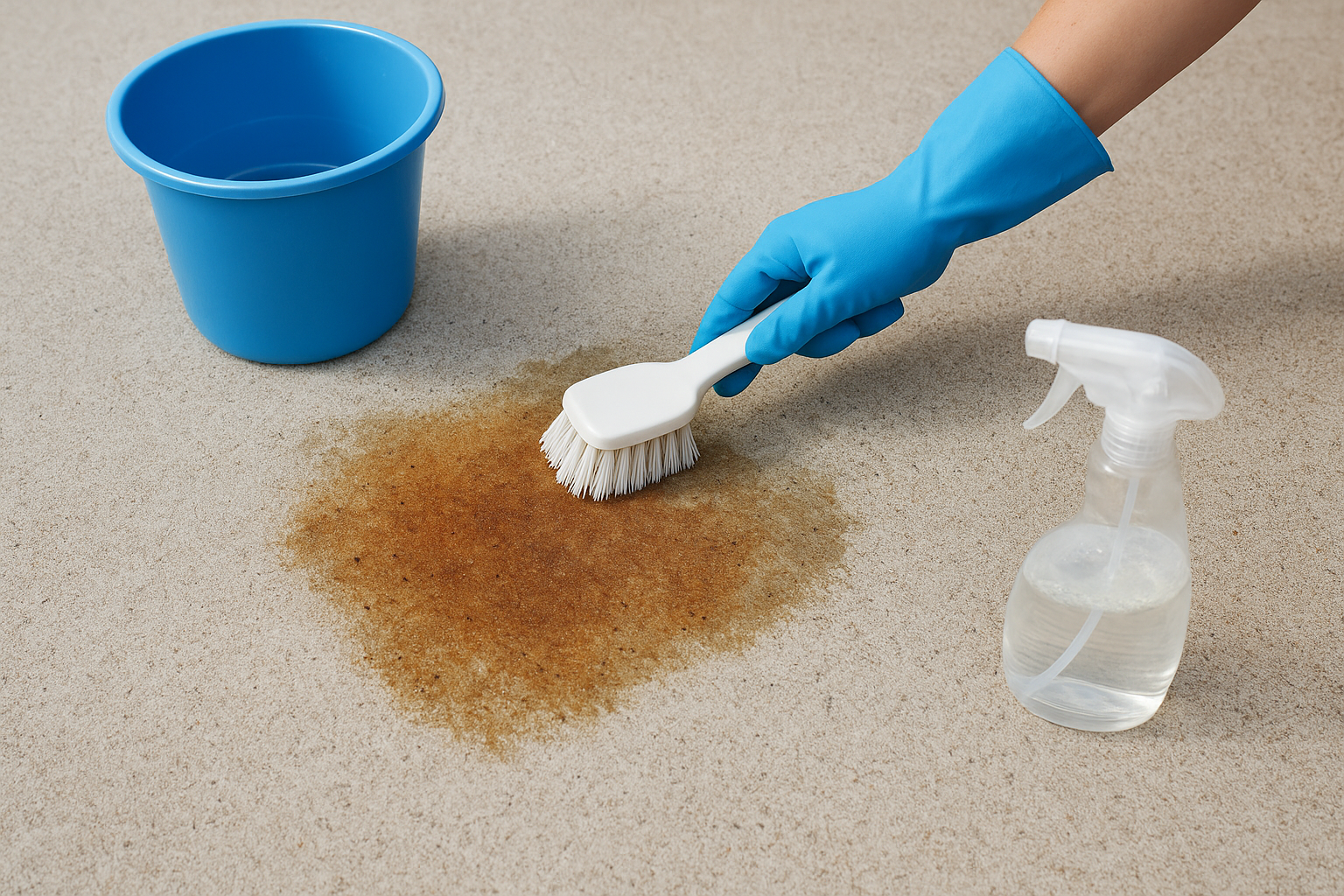
The stain type determines your cleaner. Skipping this step is the most common reason a DIY concrete cleaning job fails.
Here’s a quick reference for the most common concrete stains you’ll find on Florida driveways and patios:
| Stain Type | Common Cause | Best Cleaner |
|---|---|---|
| Oil and grease | Cars, grills, machinery | Dish soap, baking soda paste, or degreaser |
| Algae and mold | Humidity, shade, standing moisture | White vinegar, oxygen bleach, or trisodium phosphate |
| Rust | Metal furniture, mineral-heavy sprinkler water | Oxalic acid or a commercial rust remover |
| General dirt and grime | Rain, foot traffic | Dish soap and warm water |
| Paint drips | Renovation overspray | Acetone or a paint stripper (test a small area first) |
Gather your tools before you start
You don’t need expensive equipment to get concrete clean. For most DIY cleaning jobs, a stiff-bristle brush, a garden hose with a spray nozzle, a plastic bucket, and your cleaning solution are enough to handle the work effectively.
For larger surfaces like a full driveway or pool deck, a long-handle deck brush saves your knees and speeds up the process significantly. Wear rubber gloves any time you work with a chemical cleaner, including everyday products like vinegar and oxygen bleach, since prolonged skin contact causes irritation. Put on safety glasses when scrubbing vigorously since cleaning solutions can splash back toward your face, especially on a rough or uneven surface.
Step 1. Clear the surface and pre-wet the slab
Starting with a clean, wet surface makes every cleaning method work better. When you learn how to clean concrete without a pressure washer, the prep stage often determines whether your cleaner reaches the stain or just sits on top of loose debris. Skip this step, and you’ll be scrubbing dirt into the concrete instead of pulling it out.
Remove everything from the surface
Sweep the entire area with a stiff broom before you apply any liquid. Loose dirt, leaves, mulch, and gravel act as a barrier between your cleaning solution and the stain underneath. On Florida driveways and patios, organic debris also traps moisture against the concrete, which feeds the algae and mold growth you’re trying to remove.
After sweeping, move any furniture, planters, hoses, or vehicles off the slab. Even a chair leg or a potted plant sitting at the edge of your work area will interrupt your scrubbing pattern and leave dry spots where the cleaner never fully contacts the surface.
Clear access to the full slab before you wet anything. Trying to move a heavy planter after the surface is wet and slippery is a real safety hazard.
Pre-wet the concrete before applying cleaner
Once the surface is clear and swept, soak the entire slab with your garden hose before you pour or spray any cleaning solution. Pre-wetting serves two purposes: it opens the pores of unsealed concrete so the cleaner penetrates more effectively, and it prevents strong cleaning solutions from drying too quickly in Florida’s heat before they’ve had time to work on the stain.
Use a standard spray nozzle set to a wide fan pattern and work from one end of the slab to the other, making sure no dry patches remain. On a hot afternoon in July, concrete can feel cool to the touch but still be dry enough to flash-evaporate your cleaner within minutes. Wet the surface thoroughly, then move on to applying your chosen cleaner while the slab is still damp. This keeps the cleaning solution active longer and gives you better results with less scrubbing effort.
Step 2. Match the DIY cleaner to the stain
The right cleaner does most of the work for you. Knowing how to clean concrete without a pressure washer effectively comes down to pairing the correct product with the specific stain in front of you. Applying dish soap to a rust stain or vinegar to an oil slick won’t get results, so take a moment to identify what you’re actually dealing with before you pour anything on the slab.
Using the wrong cleaner on the wrong stain is the single most common reason a DIY cleaning job fails entirely.
Cleaning organic growth: algae, mold, and mildew
Florida’s humidity turns shaded concrete into a breeding ground for algae and mold faster than almost anywhere else in the country. For these stains, oxygen bleach (sodium percarbonate) is your most effective DIY option. Mix 2 tablespoons per gallon of warm water, pour it across the affected area, and let it dwell for 10 to 15 minutes before scrubbing. It lifts organic growth without damaging surrounding soil or harming nearby plants the way chlorine bleach can.
White vinegar works as a lighter-duty alternative for mild mildew or surface discoloration. Apply it undiluted, let it sit for five minutes, then scrub with a stiff brush. Vinegar won’t cut through heavy algae like oxygen bleach does, but it handles early-stage growth effectively before it sinks deeper into the pores.
Cleaning oil, grease, and automotive stains
Oil stains need a cleaner that can break down hydrocarbons, which means you need a grease-cutting dish soap or an absorbent pre-treatment. Start by covering a fresh oil stain with baking soda or cat litter and pressing it in firmly with your foot. Leave it for 30 minutes to absorb as much oil as possible, then sweep it up before applying any liquid cleaner. Follow that with undiluted dish soap scrubbed directly into the stain using a stiff brush.
For older, set-in grease stains, a commercial concrete degreaser from a hardware store outperforms household products. Keep the surface shaded while the degreaser works so it doesn’t evaporate before penetrating the pores, then scrub in firm circular motions to pull the stain out from below the surface.
Step 3. Scrub, rinse, and repeat without damaging concrete
Scrubbing technique matters as much as the cleaner you chose in Step 2. Applying too much force on damaged or older concrete can pull up loose aggregate or widen surface cracks, while scrubbing too lightly leaves the cleaner sitting on top of the stain without actually breaking it loose. When you’re figuring out how to clean concrete without a pressure washer, controlled physical effort combined with the right dwell time gets better results than raw force alone.
Use the right scrubbing technique
Start at the far end of the slab and work your way toward the drainage point or driveway edge so you push dirty water off the surface rather than spreading it back over areas you’ve already cleaned. Use a stiff-bristle deck brush with a long handle for large flat areas, switching to a hand-held scrub brush only for corners, edges, or small stains that need more targeted pressure.
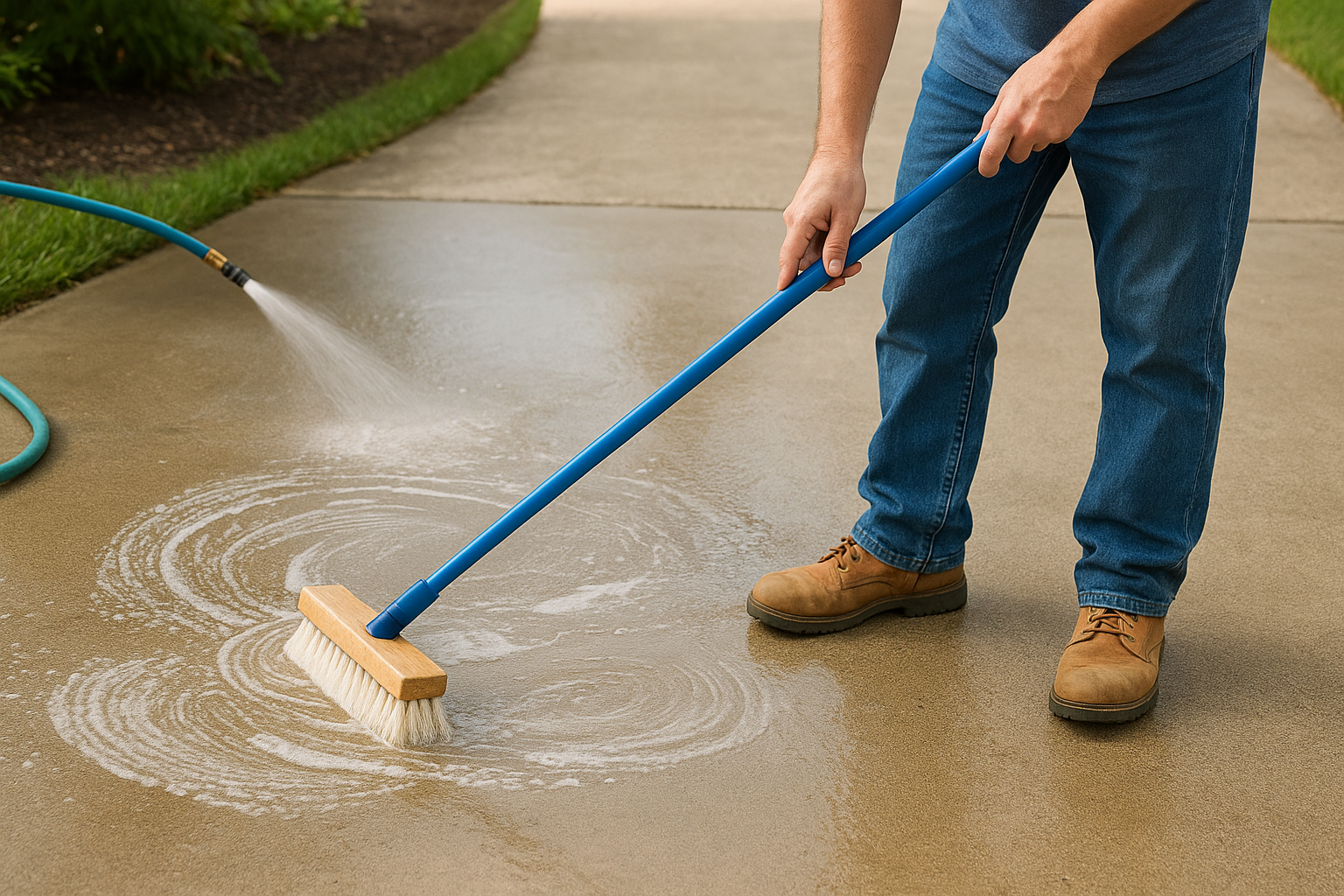
Work in overlapping circular motions rather than straight back-and-forth strokes. Circular scrubbing dislodges particles from multiple directions, which pulls more of the stain out of the pores instead of pushing it sideways. Keep consistent downward pressure throughout each pass. For oil or grease stains that resist the first round, add a small amount of undiluted dish soap directly to the brush and scrub the stain again before rinsing.
Never scrub a dry surface. If the cleaner has started to dry before you finish scrubbing, spray more water on the slab to reactivate it before you continue.
Rinse thoroughly and check your work
Rinse the entire slab with your garden hose using a strong stream from the spray nozzle, moving from the highest point down toward the drain or street. A thorough rinse removes both the cleaning solution residue and the loosened stain material that a weak rinse would leave behind, which can re-dry and create a fresh layer of discoloration across the surface.
After rinsing, let the concrete dry for 20 to 30 minutes before you evaluate your results. Wet concrete always looks darker and more uniform than dry concrete, so checking immediately after rinsing will make the slab appear cleaner than it actually is. If stubborn staining remains visible once the surface dries, repeat the full cleaning cycle one more time with fresh solution.
Step 4. Keep concrete cleaner longer with simple prevention
Cleaning the slab is only half the job. Once you know how to clean concrete without a pressure washer, the smarter move is to make your results last as long as possible so you’re not back on your knees scrubbing again in two months. Florida’s humidity, UV exposure, and organic debris create conditions where stains and growth return fast on untreated surfaces. A few consistent habits cut that cycle down significantly without requiring any special equipment.
Block organic growth before it takes hold
Algae and mold spores land on concrete constantly in Florida’s climate. They only take hold when they find standing moisture and shade, which is why shaded driveways and north-facing patios almost always develop green or black staining faster than areas that get direct sun. Cutting off their food source is the most effective prevention you can apply.
The simplest prevention step is also the easiest to skip: trim back any trees or shrubs that keep your concrete in permanent shade.
Here are four habits that actively reduce organic regrowth on your concrete:
- Clear debris within 48 hours. Wet leaves sitting on concrete create a dark, humid layer where mold colonizes within days.
- Redirect sprinkler heads that spray mineral-rich water across your driveway or walkway. Constant moisture plus dissolved minerals accelerates both algae growth and rust staining.
- Apply a diluted oxygen bleach rinse (1 tablespoon per gallon of water) to shaded areas once every two to three months as a light preventive treatment.
- Sweep high-traffic areas weekly to prevent fine grit and organic material from bonding with the surface under foot traffic.
Seal the surface after a deep clean
Applying a concrete sealer after cleaning is the single most effective way to protect your results long-term. A penetrating sealer fills the pores of the slab so oil, water, and organic growth have no easy entry point. Most hardware store sealers designed for driveways and patios can be applied with a basic paint roller and last two to three years before needing a fresh coat.
Wait until the concrete is completely dry after your cleaning session before applying sealer, typically 24 to 48 hours in Florida humidity. Rolling it onto a damp surface traps moisture underneath, which can cause the sealer to cloud or peel within weeks.
Wrap-up and next steps
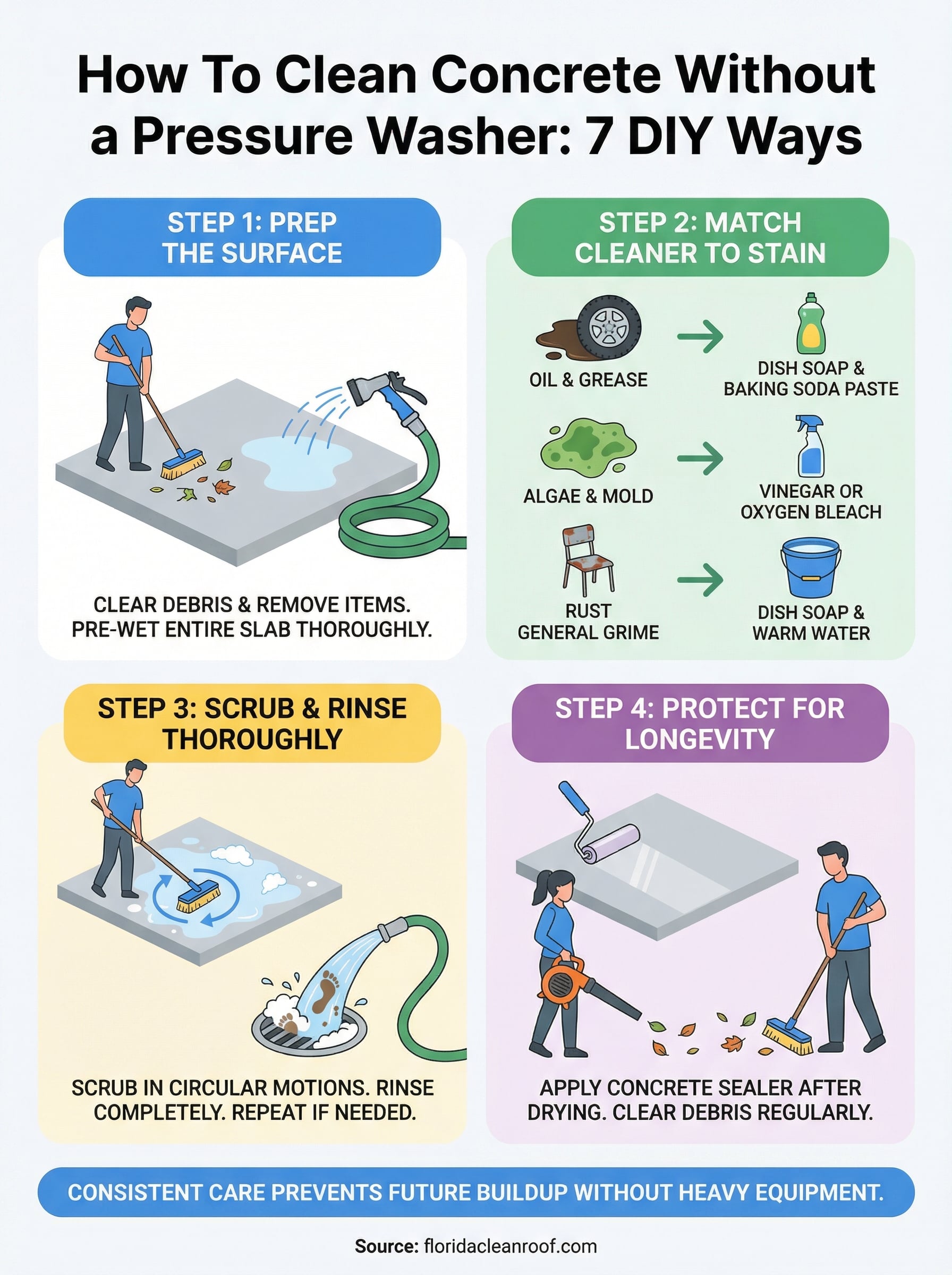
Knowing how to clean concrete without a pressure washer comes down to four repeatable steps: prep the surface, match the cleaner to the stain, scrub with the right technique, and protect the slab after you finish. Each method in this guide uses affordable, accessible products that you can buy at any hardware store or already have under your kitchen sink. The results hold up well when you back them with consistent prevention habits like clearing debris quickly and applying a sealer after a deep clean.
For homeowners in Southwest and Southeast Florida, DIY cleaning works well for light to moderate staining on manageable surface areas. If you are dealing with a heavily stained driveway, a full pool deck, or widespread algae growth across multiple surfaces, a professional cleaning service will save you time and produce better results. Reach out to the team at Florida Clean Roof to get an honest assessment and a free quote.