Bare concrete in Florida takes a beating. Between relentless UV exposure, afternoon downpours, and humidity that never quits, unsealed driveways, patios, and walkways deteriorate faster than most homeowners expect. A good Quikrete concrete sealer can slow that damage significantly, but picking the right formula matters more than most people realize. Quikrete offers several distinct sealer types, each designed for a specific finish and level of protection.
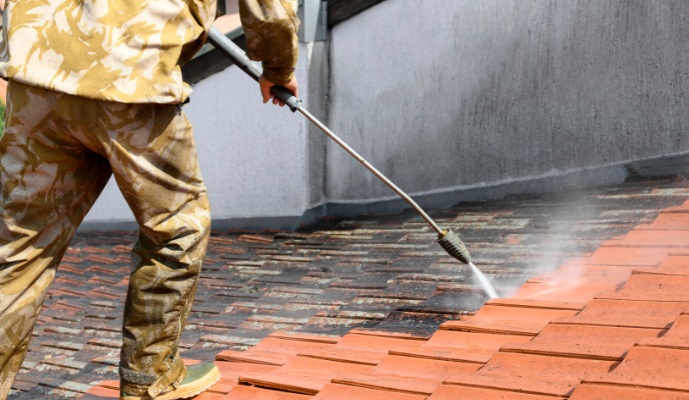
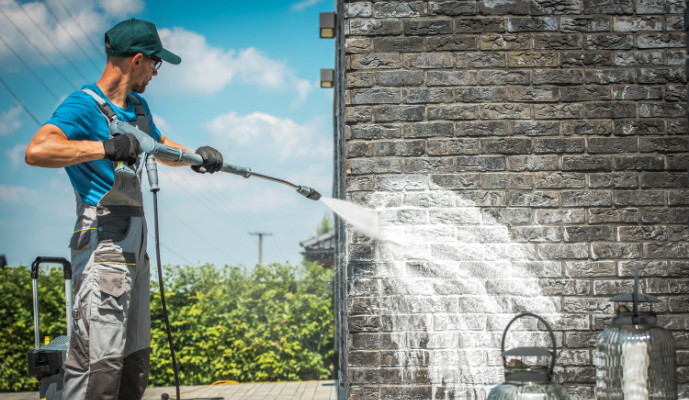
At Florida Clean Roof, we see the results of neglected hardscaping every day during our pressure washing and exterior maintenance work across Southwest and Southeast Florida. A freshly cleaned driveway or pool deck looks great, but without proper sealing, organic growth and moisture damage return quickly. That’s why understanding your sealer options is worth the effort, it protects the investment you just made in cleaning.
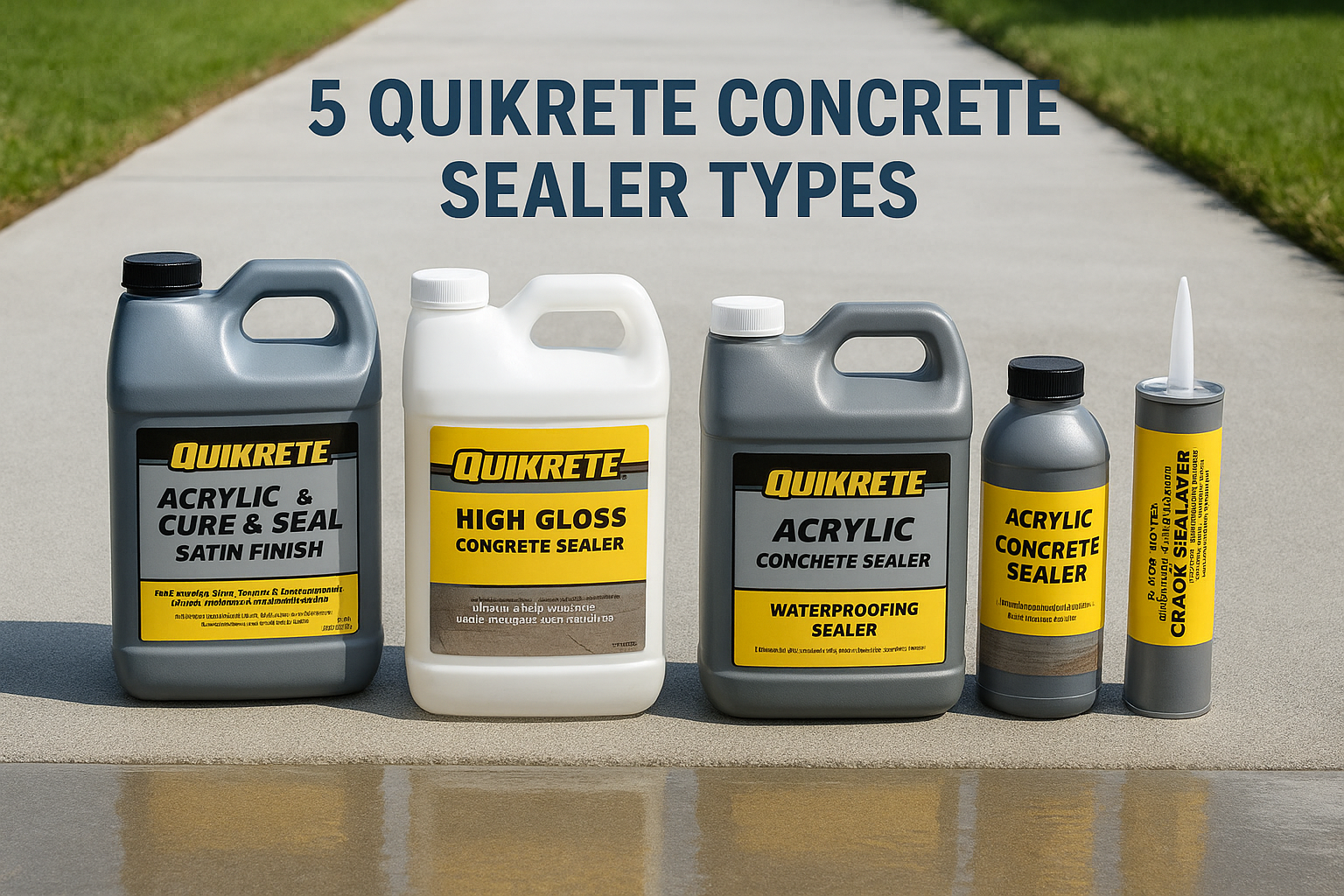
This article breaks down five Quikrete concrete sealer types, from high-gloss to waterproofing, covering what each one does, where it works best, and how to apply it so you can choose the right product for your property.
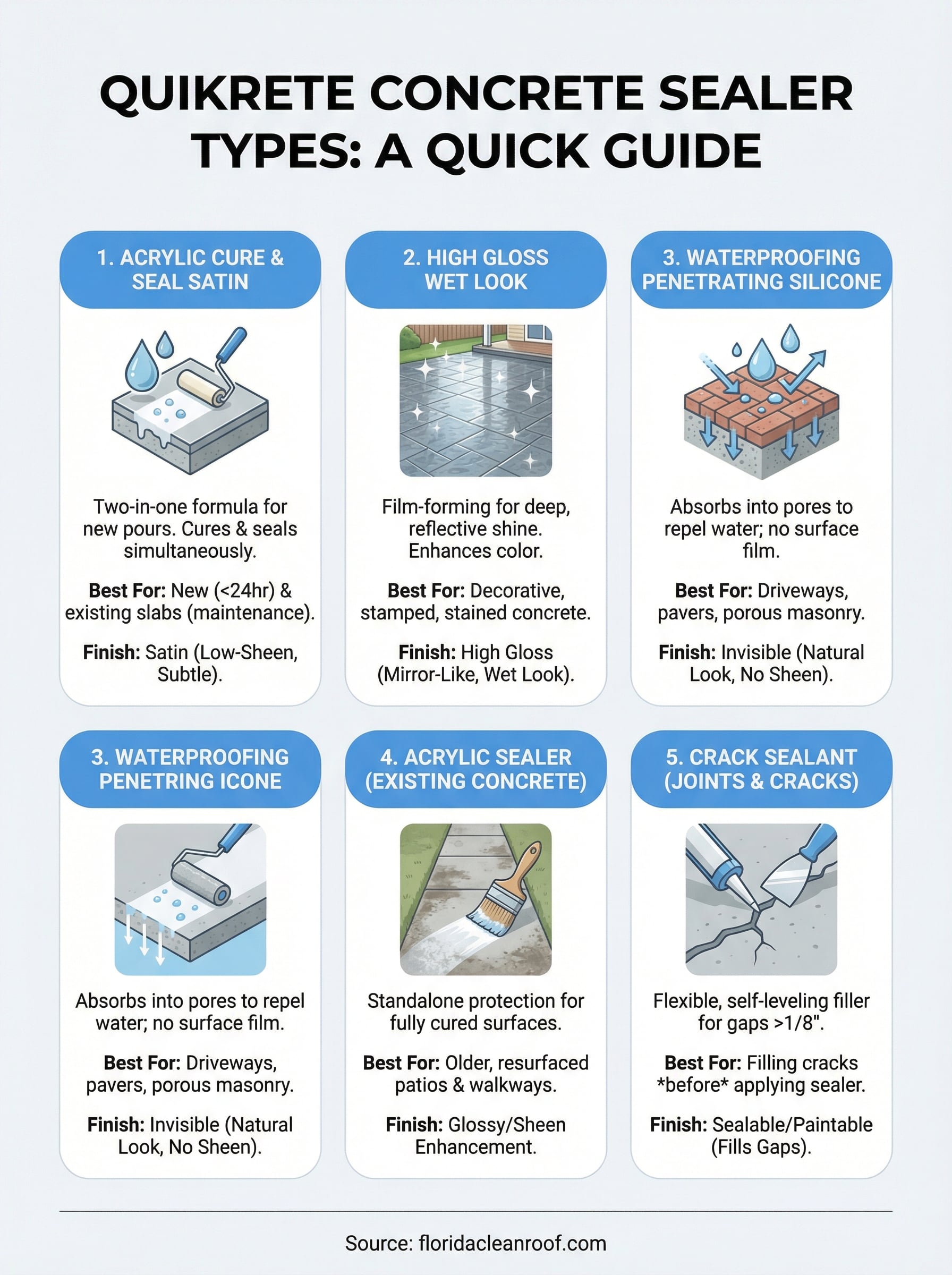
1. Quikrete acrylic concrete cure and seal satin finish
This product is a two-in-one formula that cures fresh concrete while sealing the surface in a single application. It works as a quikrete concrete sealer for both new pours and existing slabs, making it one of the most practical options in the Quikrete lineup.
What it is and the finish you get
The satin finish sits between flat and high gloss. You get a low-sheen appearance that enhances the concrete’s natural color without the reflective look that high-gloss formulas produce. Most homeowners prefer this finish for patios and walkways where a subtle enhancement looks more natural than a wet look.
Best use cases for new vs. existing concrete
On new concrete, apply it within 24 hours of finishing the pour to lock in moisture and support proper curing. On existing slabs, it works well as a maintenance coat when the previous sealer has worn thin but the surface remains structurally sound.
Applying cure-and-seal on fresh concrete too late can result in surface dusting and reduced long-term strength.
Surface prep that prevents peeling and whitening
Clean the surface completely and let it dry for at least 24 hours before applying. Any moisture trapped under the sealer causes whitening or bubbling that requires full removal and reapplication.
Application options, recoat timing, and weather limits
You can apply this product by roller or pump sprayer on a day when temperatures stay between 50°F and 90°F. Recoat within 2 to 4 hours while the first coat is still tacky to ensure proper bonding between layers.
Dry time, full cure, and when you can drive on it
Foot traffic is safe after 1 to 2 hours. Wait 72 hours before driving on the surface to avoid tire marks or pressure damage to the film.
Coverage, number of coats, and what a gallon really covers
One gallon covers roughly 200 to 300 square feet, depending on surface porosity. Most projects need two coats for adequate protection and an even sheen across the slab.
Common problems and how to avoid them
Roller marks and uneven sheen appear when you apply too much product at once. Work in small, manageable sections and maintain a wet edge to keep the finish consistent from start to finish.
2. Quikrete high gloss concrete sealer wet look
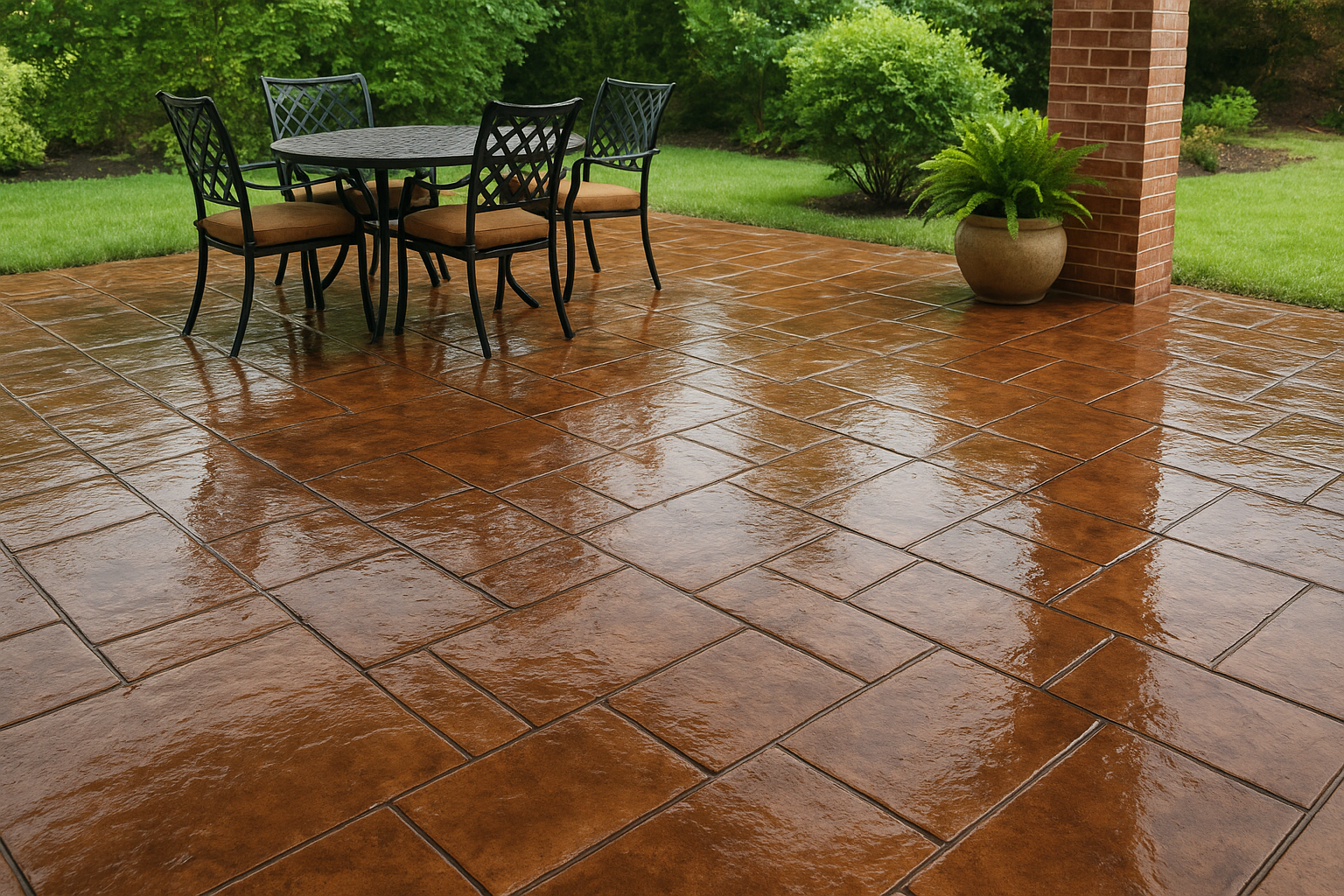
The Quikrete high gloss concrete sealer delivers a deep, reflective finish that makes concrete look permanently wet. It forms a protective film on the surface rather than penetrating it.
What it is and the shine level you should expect
Expect a mirror-like sheen that significantly darkens and enriches the concrete’s color. This is the highest gloss level available in the Quikrete lineup.
Best use cases for decorative and stamped concrete
This sealer works best on stamped, stained, or colored concrete where you want to highlight pattern detail and surface texture on patios or pool decks.
Surface prep for maximum gloss and adhesion
The surface must be completely clean and dry. Any dirt, efflorescence, or existing sealer residue will trap under the film and create a hazy, uneven finish.
Grinding or etching old sealers before applying high gloss significantly improves adhesion and reduces delamination risk.
Application options and how to avoid roller marks
Use a thin-nap roller and apply light, even coats. Avoid going back over sections that have started to dry, as this pulls the film and creates visible streaks.
Dry time, recoat window, and slipperiness considerations
Allow 1 to 2 hours between coats. Note that gloss sealers become slippery when wet, so add a non-slip additive for pool decks and walkways.
Coverage, coats, and budgeting for larger slabs
One gallon covers approximately 200 to 250 square feet over two coats. Budget for a third coat on highly porous surfaces.
When to avoid high gloss sealers
Skip this product on garage floors or driveways with heavy vehicle traffic, where tire scuffing degrades the finish quickly.
3. Quikrete waterproofing sealer penetrating silicone
Unlike film-forming products, this quikrete concrete sealer absorbs into the substrate. The silicone formula builds a water-repellent barrier inside the pores rather than on top.
What it is and how penetrating sealers work
The sealer penetrates below the surface and reacts chemically to repel water while leaving no visible coating behind.
Best use cases for driveways, pavers, and porous masonry
It works best on unsealed driveways, brick pavers, and block walls where water intrusion causes cracking or efflorescence over time.
How to test absorption and choose between coats
Sprinkle water on the surface first. Quick absorption confirms the concrete is porous enough, and dense slabs typically need only one coat.
Highly porous masonry often needs two coats applied back-to-back while the first coat is still wet for full saturation.
Application basics and avoiding overspray issues
Use a pump sprayer in steady overlapping passes. Silicone overspray is hard to remove from glass and painted surfaces, so mask everything nearby before you start.
Dry time, cure time, and performance in Florida rain
Foot traffic is safe after 1 to 2 hours. Full water repellency develops within 24 hours, so avoid rain contact during that window.
Coverage expectations on porous vs. dense surfaces
Porous concrete consumes one gallon per 100 to 150 square feet. Denser pavers can stretch the same gallon to 250 square feet.
Limitations, including stain resistance and appearance changes
This product does not block oil or chemical stains. It also adds no sheen or color, so avoid it on decorative surfaces where appearance matters.
4. Quikrete acrylic concrete sealer for existing concrete
This product is a standalone sealer designed specifically for slabs that have already cured. Unlike the cure-and-seal formula, it skips the curing function entirely and focuses on surface protection and sheen enhancement for older concrete.
What it is and how it differs from cure-and-seal products
The acrylic formula lays down a protective film that guards against moisture, UV damage, and light surface wear. It does not contribute to concrete strength the way a cure-and-seal product does on fresh pours, making it the right choice for resurfaced or weathered slabs that simply need a maintenance coat.
Best use cases for older slabs and resurfaced concrete
Use this quikrete concrete sealer on patios, walkways, and resurfaced driveways where the original sealer has worn off and the slab needs renewed protection.
Compatibility with previous sealers and how to check
Apply a small test patch first. Bubbling or lifting signals incompatibility with the existing sealer and means you need to strip the surface before proceeding.
Applying acrylic sealer over an incompatible base coat almost always leads to delamination within a few months.
Application basics, edge work, and avoiding lap lines
Roll in one consistent direction and keep a wet edge at all times to prevent visible overlap lines at section boundaries.
Dry time, recoat timing, and long-term maintenance
Foot traffic is safe after 1 to 2 hours. Reapply every 1 to 3 years depending on traffic and UV exposure.
Coverage and how to estimate gallons for your project
Expect 200 to 300 square feet per gallon on a smooth, previously sealed slab.
Failure modes like flaking and whitening and what causes them
Moisture beneath the film is the leading cause of whitening and flaking. Always confirm the slab is fully dry before you open the can.
5. Quikrete ready-to-use concrete crack sealant for joints and cracks
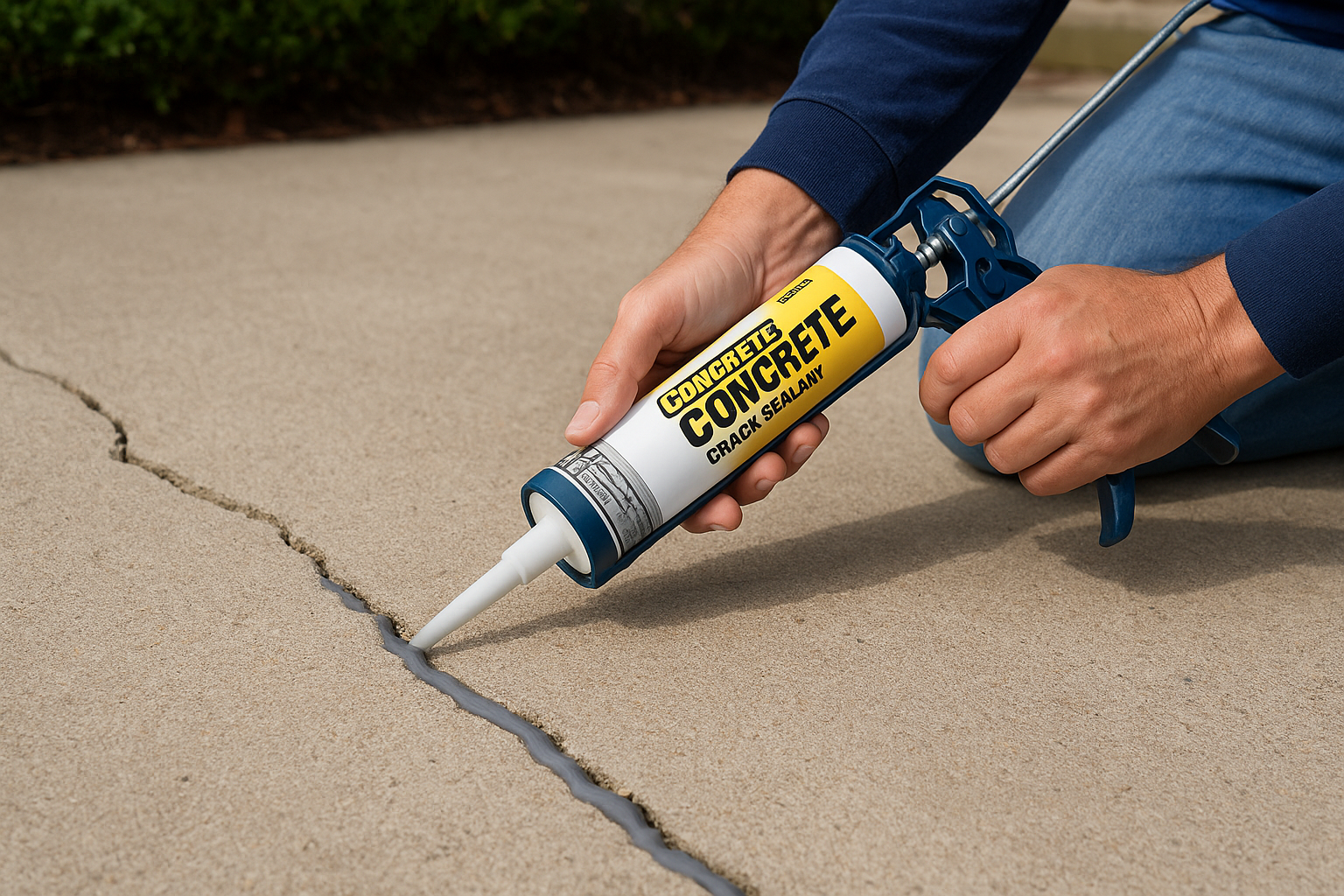
This product is a flexible, self-leveling sealant designed to fill cracks and expansion joints before you apply a quikrete concrete sealer over the slab. It comes ready to use in a standard caulk tube, requiring no mixing.
What it is and when it beats a film-forming sealer
A film-forming sealer bridges hairline cracks but fails on gaps wider than 1/8 inch. This sealant fills open joints directly, giving you a stable surface before any topcoat goes down.
Best use cases for crack filling before sealing a slab
Use it on driveways and patios with visible cracks or open control joints before applying any surface sealer.
Prep steps that make the sealant last
Remove all loose debris and dust from inside the crack, then let the area dry completely before applying.
Applying sealant into a damp crack reduces bond strength and leads to early failure.
Application method, tooling, and cleanup
Cut the tube tip at a 45-degree angle, fill the crack, and tool the surface flat with a putty knife. Clean your tools with water immediately before the product skins over.
Cure time and when you can seal over it
Wait 24 hours before applying any topcoat sealer over the filled crack.
How far one tube goes and how to estimate quantity
One 10-oz tube covers approximately 30 linear feet of a standard 1/4-inch crack.
What it will not fix, including structural movement
This sealant handles cosmetic gaps and static cracks only. It will not stabilize a slab with active settling or ongoing structural movement.
Final thoughts
Choosing the right quikrete concrete sealer comes down to two things: the condition of your surface and the finish you want. New concrete needs a cure-and-seal product. Older slabs with visible wear need a standalone acrylic sealer. Decorative surfaces benefit from the wet-look formula, while driveways and pavers that absorb water quickly respond best to the penetrating silicone option. Fill any cracks first, then seal over them.
Florida’s climate makes sealing non-negotiable for any exterior concrete surface. High humidity, UV intensity, and heavy rain cycles accelerate deterioration faster than most homeowners expect. A proper sealer applied correctly extends your slab’s lifespan by years and reduces how often you need to clean or repair it.
If your hardscape surfaces need professional cleaning before you seal, our team at Florida Clean Roof handles pressure washing for driveways, pool decks, and stone surfaces across Southwest and Southeast Florida. A clean surface gives any sealer the best possible foundation to perform.